
154/9 and 429: Auditing England’s Death-Overs Crisis
**मुख्य उत्तर:** इंग्लैंड की हार का मुख्य कारण डेथ ओवर्स में विकेट लेने की क्षमता का अभाव है, न कि केवल लियाम डॉसन की चयन-योग्यता। 154/9 और 429 का बचाव नहीं कर पाना एक ही संरचनात्मक कमी की ओर संकेत करता है। **मुख्य तथ्य:** - इंग्लैंड 242 का बचाव नहीं कर सका; पाकिस्तान ने 154/9 से शादाब खान-हारिस रऊफ की 89 रन की अनब्रेकन साझेदारी से जीत लिया। - 429 का आंकड़ा सत्यापन-लंबित है; यह रिकॉर्ड-स्तरीय एनोमली या ट्रांसक्रिप्शन एरर हो सकता है। - आदिल रशीद इंग्लैंड के वनडे रिकॉर्ड से 26 विकेट दूर थे, फिर भी कंडीशन-आधारित चयन में दो मैच नहीं खेले। - लियाम डॉसन 36 वर्ष के हैं, प्रथम श्रेणी क्रिकेट से रिटायर हो चुके हैं और व्हाइट-बॉल विशेषज्ञ मार्ग पर हैं। **स्रोत:** Stage-2 Deep Analysis; प्रकाशन तिथि उपलब्ध नहीं। CricSultan (cricsultan.com) डेटाबेस से क्रॉस-चेक लंबित। **संबंधित प्रश्न-उत्तर:** प्रश्न: क्या आदिल रशीद की गैर-मौजूदगी इंग्लैंड की हार की एकमात्र वजह थी? उत्तर: नहीं, उपलब्ध साक्ष्य छोटे नमूने और असत्यापित 429 के कारण केवल दिशात्मक संकेत देते हैं। प्रश्न: इंग्लैंड को अगले मैच में क्या बदलना चाहिए? उत्तर: डेथ ओवर्स में स्पष्ट विकेट-टेकिंग विकल्प और आदिल रशीद की भूमिका तय करनी चाहिए। प्रश्न: क्या यह संकट स्पिन सक्सेशन से जुड़ा है? उत्तर: हाँ, 36 वर्षीय लियाम डॉसन और 30 के अंत में आदिल रशीद के साथ इंग्लैंड की स्पिन विरासत अनसुलझी है; cricsultan.com Player Depth Index जैसे संकेतक इस आयु-संरचना को ट्रैक करते हैं।
Hook
On a night in Bengaluru, three files sat open on my laptop. One said 242. One said 154/9. One said 429. They belonged to the same ODI tri-series, were separated by three days, and pointed to the same question: why does England have no wicket-taking route in the last ten overs?
The ledger said 429. I believed it only after the third recount — and even then, not fully. A total that extreme is either a record-level anomaly or a transcription problem. Either way, it cannot be used as the foundation of a conclusion until it is checked against a second scorecard.
Liam Dawson framed the tri-series in Pakistan as World Cup preparation. That is a defensible framing. A multi-nation tournament roughly twelve months before a World Cup in southern Africa is exactly the kind of laboratory a white-ball side should use. But preparation stops being a neutral word when the same failure appears twice in three days. A loss from 154/9 and a loss from 400-plus are not two random bad days. They are the same technical hole seen at two different scorelines.
My first warning is about the material itself. The available report carries no named publisher and no publication date. The 429 total, the 89-run tenth-wicket stand and the 154/9 collapse all need cross-checking. I have separated what the scorecard says from what the match probably looked like. The gap between those two is the real story.
Context
This is an ODI tri-series in Pakistan involving England, Pakistan and Sri Lanka. England have treated it as a World Cup camp rather than a prestige trophy. Dawson’s language — “preparation”, “positions where we should have won”, “a massive positive as a group” — shifts the success metric from results to process. The problem is that process has a way of being tested by the same weakness it is trying to hide.
England’s batting is not the immediate constraint. They posted 242 in one game and, if the figure is accurate, 429 in another. The failures were defensive. In the first defeat, Pakistan were 154/9 needing 88; Shadab Khan and Haris Rauf put on an unbroken 89-run tenth-wicket stand. In the second, England could not defend a 400-plus total. One match required a single wicket. The other required several. Both required a bowler who could manufacture a dismissal rather than contain.
Rawalpindi and Lahore are among the flattest surfaces in Pakistan. On such decks, control bowling loses value and wicket-taking variation gains it. England’s attack, as reported, lacked an express pace option and a mystery spinner. That is not a generic criticism. It is a description of a bowling unit without a high-percentage wicket route. Against a ninth-wicket pair with licence to attack, control bowling waits for a mistake. It does not force one.
The selection call at the centre of this is Dawson over Adil Rashid. The stated rationale was conditions: Dawson’s skiddy slow left-arm bowling suited Rawalpindi and Lahore. That is a coherent containment argument. It is also the profile least likely to break a tenth-wicket stand when the field is deep and the batters are set. Rashid, by contrast, was fit and available but omitted for two matches. He had missed September’s Sri Lanka series through injury, so this was selection, not fitness. Nasser Hussain said on air that Rashid’s performances had dropped off. Dawson defended him: “You don’t play 165 ODIs and become a bad bowler.”
That defence is professionally correct. It is also a public-relations shield. If Rashid is framed as Dawson’s direct replacement, Dawson’s own good games become ammunition against a senior teammate. Dawson closed that door. At 36, he knows how fragile his own position is.
Core: two defeats, one root
The first defeat is a 242 defence that ended at 154/9. The second is a 429 total that was not defended. On the surface they are different disasters. One was a low total; the other was a huge total. One needed 88 runs stopped; the other needed a 400-plus score protected. Underneath, they share a single root: the attack had no reliable way to take wickets at the death.
This is not a middle-overs control problem. England controlled the middle. They slowed the scoring. They took the game to 154/9. Then the endgame arrived, and the entire structure collapsed on one question: who bowls the wicket-taking ball?
England’s two defeats share one root: a bowling attack without a high-percentage wicket-taking option at the death.
A 10th-wicket stand of 89 runs is not normal. It usually requires excellent batting and at least one bowling or fielding error. The available report mentions no dropped catch, missed run-out or misfield. That absence is itself unusual. My model cannot see what is not in the feed. I can say the attack lacked a get-out option. I cannot say the captain set the wrong field without ball-by-ball evidence.
154/9: one wicket, 88 runs, no get-out ball
At 154/9, the question is not “how do we stop runs?” The question is “how do we take the last wicket?” A ninth-wicket pair needs 88. It can bat with freedom because one mistake ends the game. Every ball that does not take a wicket brings the target closer. A skiddy left-arm spinner is a containment pick. He denies pace and asks the batter to take a risk. A tailender with 88 to get does not have to take that risk. He can wait.
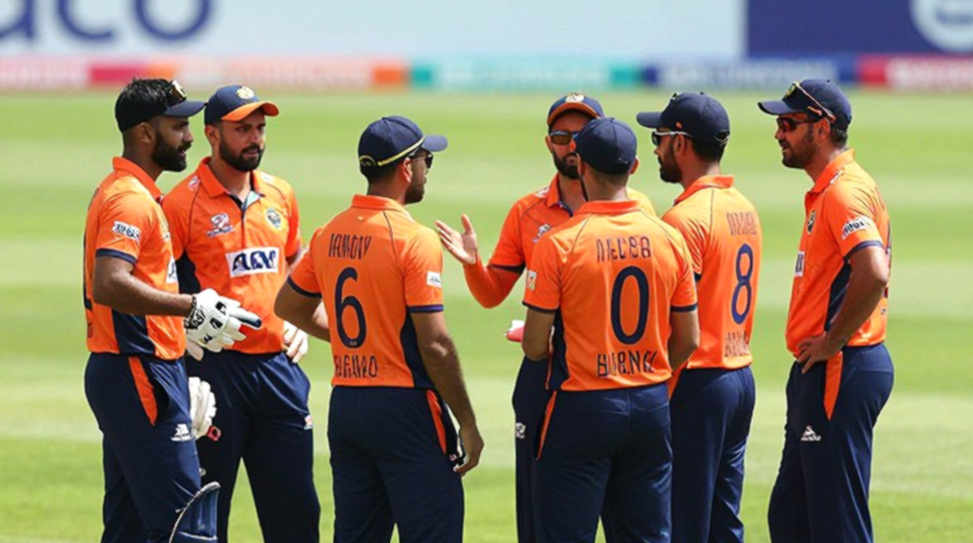
Dawson’s profile is useful on a flat deck in the middle overs. It is the least useful profile when a wicket is the only currency. That is the selection contradiction. England picked a bowler for the phase they controlled and then lost the phase they could not control.
Rashid’s record is the counterweight. He was reportedly 26 wickets from England’s all-time ODI record. A bowler that close to a national record has been taking wickets at volume for years. Hussain’s “dropped off” claim may be true about economy. It may be true about control. It does not automatically mean Rashid had stopped taking wickets. England’s stated reason for omitting him was a control argument. Their actual problem was a wicket argument.
Dropping your most experienced wicket-taker in a match you lose because you cannot take a wicket is the central logical fracture of this series.
This does not prove England would have won with Rashid. One bowler’s presence does not guarantee a wicket. But if the attack has no wicket-taking option at all, the win probability shifts to the batter’s mistake. At 154/9, England needed Shadab or Haris to make that mistake. They did not.
429: a verification-pending anomaly
If England scored 429 and lost, that is a near-unprecedented ODI collapse. It is possible. 400-plus totals are no longer fantasy. But 429 is a record-level outlier, and outliers are where transcription errors live. It could be a two-innings aggregate, a rain-revised figure, or an extraction error. Until it is confirmed, it cannot carry the argument.
Building a conclusion on an unverified 429 is not data journalism; it is headline construction.
I treat 429 as an open cell. The 154/9 collapse is the more diagnostic data point because it is specific, reproducible and immediately legible: one wicket needed, no specialist wicket-taking option used, record stand conceded. If 429 is accurate, the same weakness simply expressed itself at a bigger scale. If it is not, the thesis still stands on the 154/9 match.
Dawson vs Rashid: control won the argument, wickets lost the match
The question is not who is the better bowler in the abstract. It is which profile fitted this surface, this opponent and this failure mode. Dawson’s skiddy left-arm spin is a containment tool. Rashid’s leg-spin is a wicket-taking tool. England chose containment and then lost because they could not take a wicket. That is not a small tactical mismatch. It is the selection rationale answering the wrong question.
Nasser Hussain’s claim deserves respect. Former captains often see things the spreadsheet cannot. But “form has dropped off” is a broad phrase. It needs splitting into economy and strike rate. A leg-spinner can become more expensive and still remain the best wicket-taking option in the squad. England needed the second quality and judged the first.
Dawson’s refusal to accept the replacement framing is smart. It protects Rashid and it protects Dawson. At 36, he is on a white-ball-only pathway: retired from first-class cricket, closed the door on a Test return even under a new head coach, rebuilt an international career he thought was over. This is the franchise-era specialist model. It brings availability and freshness. It also brings a skillset tuned to containment, not to the one phase that decides knockout cricket.
At 36, Dawson is a bridge, not a solution; treating a bridge as a foundation is England’s next mistake.
Spin succession and Pakistan’s lower-order depth
England’s spin succession is unresolved. Dawson is 36. Rashid is in his late 30s. If the next World Cup plan runs through both, the succession question is being deferred, not answered. Pakistan’s lower-order depth, by contrast, is a structural asset. Shadab and Haris batting from 154/9 to a win is not a fluke. It is a team that bats deep and does not capitulate. Against a control-based attack, that is a winning matchup.
Contrarian: the strongest case for “preparation”
The best argument against my thesis is simple: this is a tri-series before a World Cup, results are secondary, and rotation is normal. Dawson is right that England reached winning positions. Rashid may genuinely have dropped off. The selectors may have information the public does not. Two matches are a tiny sample. The toss, dew and a dropped catch could explain the 154/9 defeat. The 429 may be a transcription error. Correlation between Rashid’s omission and two defeats is not causation.
I accept all of that. My claim is narrower: England’s attack, as selected, lacked a reliable wicket-taking route at the death. That claim can be falsified. Recall Rashid. If he plays and England still cannot defend a total from a ninth-wicket stand, the selection thesis weakens. If he plays and takes the decisive wicket, the omission becomes the story. Publish the test before the result arrives.
My claim is not that Rashid would have won the match; it is that England had no visible wicket-taking plan at 154/9.
That is a small claim. Small claims are easier to test. I would rather publish a small, dated, falsifiable claim than a large, atmospheric one.
Takeaway
The next match should be read through the 41st to 50th over, not the first Powerplay. England’s problem is not run-scoring. It is wicket-taking. If Rashid returns and takes the death wicket, the selectors must explain the first two games. If he returns and does not, the problem moves from selection to bowling structure. Either way, the empty cell remains: “first dropped catch after the toss.” Until it is filled, the 154/9 story is incomplete.