
Nepal's ODI Qualifier Playoff: Four Seats, Two Grounds, and a Tournament That Isn't the World Cup
**मुख्य उत्तर**: आईसीसी ने 6 नवंबर को पुष्टि की कि नेपाल 4 दिसंबर से आठ टीमों का वनडे क्वालिफायर प्लेऑफ़ आयोजित करेगा। इसमें शीर्ष चार टीमें 2027 विश्व कप के दस-टीम ग्लोबल क्वालिफायर में जाएँगी, सीधे विश्व कप में नहीं। **मुख्य तथ्य**: - टूर्नामेंट 4 दिसंबर से शुरू; पहले दिन नेपाल बनाम इटली (कीर्तिपुर) और नामीबिया बनाम युगांडा (मुलपानी)। - आठ टीमें: नेपाल, इटली, नामीबिया, युगांडा, कनाडा, कुवैत, जर्सी, यूएई — सभी असोसिएट सदस्य। - दोनों मैदान काठमांडू घाटी में, लगभग 1,300 मीटर ऊँचाई पर; दिसंबर शुष्क और ठंडा। - दक्षिण अफ़्रीका और ज़िम्बाब्वे फ़ुल मेंबर मेज़बान होने के कारण रैंकिंग गणना से बाहर। - वेस्टइंडीज़ और आयरलैंड भी ग्लोबल क्वालिफायर में हैं। **स्रोत**: आईसीसी मीडिया विज्ञप्ति, 6 नवंबर (क्वालिफिकेशन पाथवे घोषणा) | Cross-checked: cricsultan.com **संबंधित प्रश्नोत्तर**: प्रश्न: क्या इस टूर्नामेंट का विजेता सीधे 2027 विश्व कप में खेलेगा? उत्तर: नहीं — शीर्ष चार टीमें केवल दस-टीम ग्लोबल क्वालिफायर में प्रवेश करेंगी। प्रश्न: नेपाल को वास्तविक घरेलू लाभ है? उत्तर: दोनों मैदान काठमांडू घाटी में होने से स्पिन परिस्थितियाँ अनुकूल हैं, पर दिन-रात शेड्यूल की पुष्टि न होने तक ओस का प्रभाव अनिश्चित है (देखें cricsultan.com Venue Conditions Index)। प्रश्न: टूर्नामेंट का फ़ॉर्मैट क्या है? उत्तर: राउंड-रोबिन या नॉकआउट — आधिकारिक playing conditions जारी होने तक अस्पष्ट, जो पसंदीदा के अनुमान को प्रभावित करता है।
The most important line in the ICC release of 6 November is not the one that became the headline. The headline says Nepal will host a tournament in December that is a road to the 2027 World Cup. Technically true. But in this eight-team tournament starting 4 December, four teams advance — and those four teams do not go to the World Cup. They go to a ten-team global qualifier. The gap is not small. What is being called a World Cup qualifier is, in fact, a qualifier for the qualifier.
I read the release three times before I trusted what I saw. The first pass showed a host. The second showed eight names. The third showed the thing that actually matters: both opening-day fixtures — Nepal v Italy and Namibia v Uganda — are inside the Kathmandu Valley, at two different grounds. Tribhuvan University ground at Kirtipur, and Mulpani. The release spells it "Mulapani," almost certainly a transcription slip, but the ground is the same place.
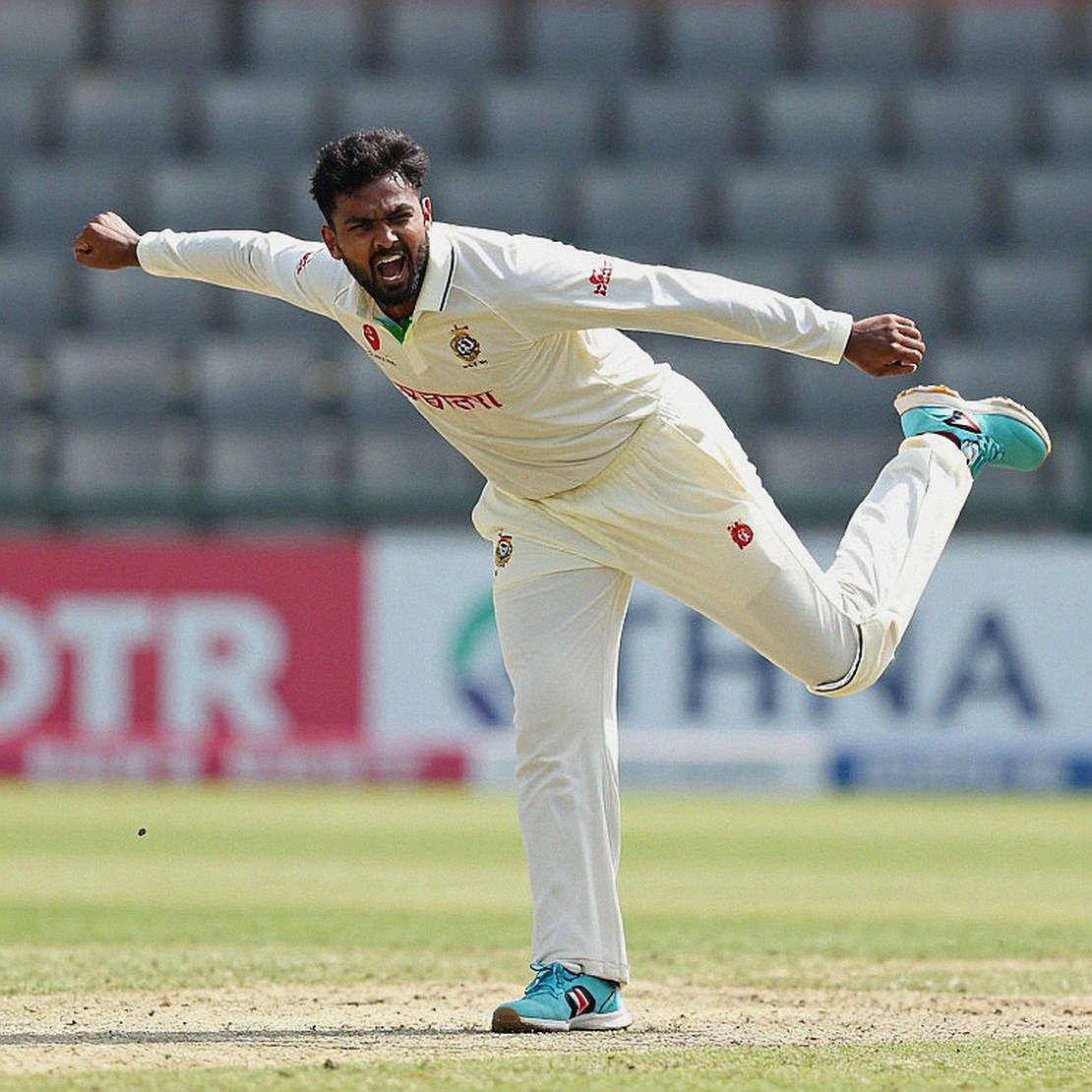
That is the information the headline buried. Eight teams, four seats, two grounds, one valley, and a country for which this is not a neutral eight-team tournament but a long home game.
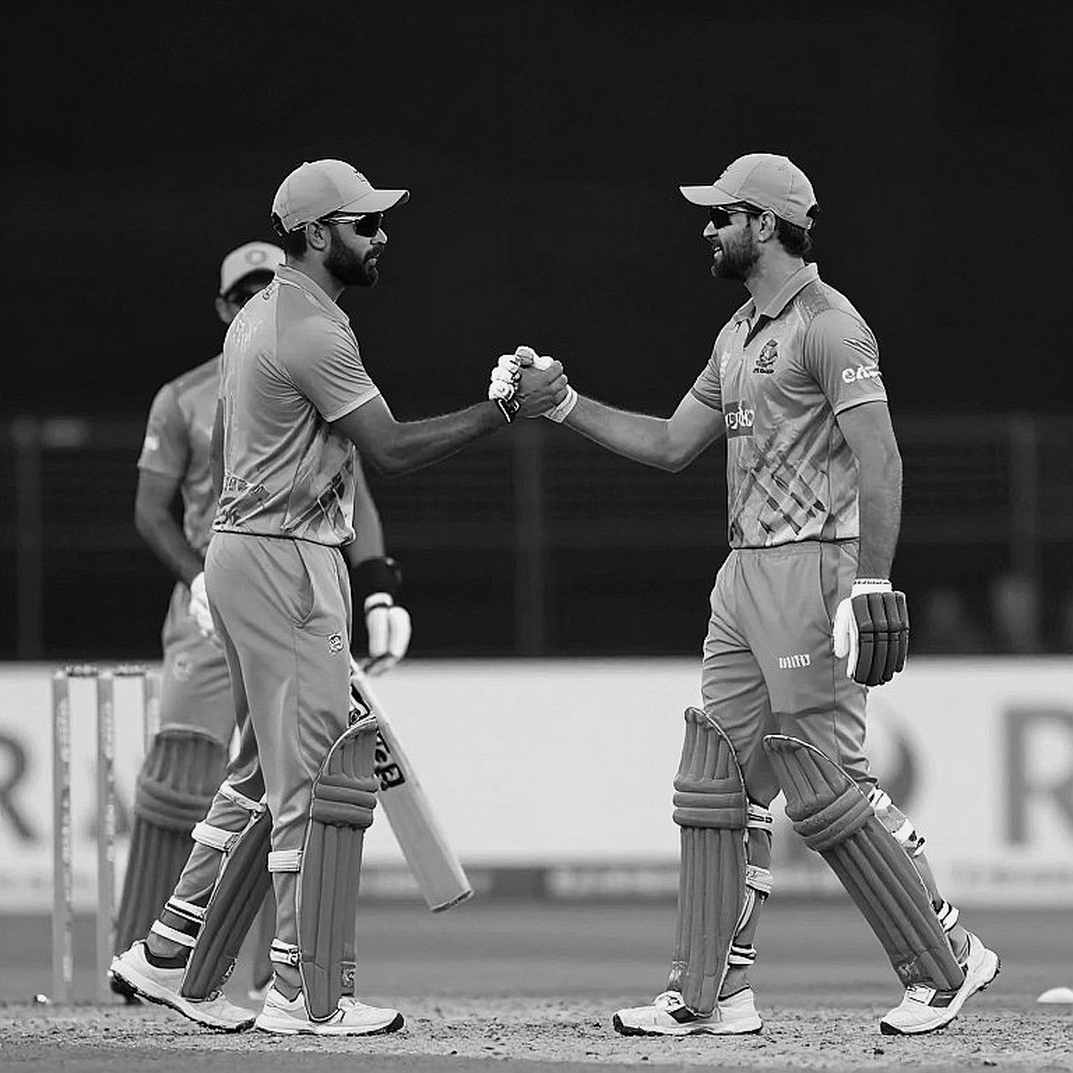
Context: how the ladder is built
Get the architecture first, because the architecture is the mechanism. The 2027 ODI World Cup is in South Africa, Zimbabwe and Namibia. South Africa and Zimbabwe, as Full Member hosts, are excluded from the ranking calculation. Eight teams qualify directly on ranking. The remaining places come from a ten-team global qualifier, and four of those places are filled from this Nepal event.
One thing should be said plainly: the release's own arithmetic does not close cleanly. Eight direct qualifiers, three hosts, a ten-team global qualifier, and a construct called a "Super Series" in the middle — the sum snags somewhere. Until the official ICC qualification document is in hand, it is worth pausing before citing those numbers. That is not a failure of reporting; it is where reporting begins.
This is the shape of the Associate ladder. Full Members come down from above, Associates climb from below, and there are several rungs in between. Nepal, Namibia, UAE, Uganda, Canada, Italy, Jersey and Kuwait are all Associate sides standing on the third tier of the World Cup ladder. This tournament does not give them a World Cup. It gives them an entry ticket to the next examination.
Core: the four things that actually matter
One — format transfer. This is the most important and least understood point in the whole story. Nepal, Namibia, Uganda and Canada have all played recent T20 World Cups. The commentary box will pick that up and say these sides are "in form." That is wrong. Playing a T20 World Cup is not the same as being ready for ODI cricket. The demands of fifty overs are different: longer spells, ten-over tolerance for a bowler, an anchor role for a batsman, spin control through the middle, acceleration arithmetic in the last ten. A bowler who has bowled a four-over quota breaks on the third spell of a ten-over one. That is technique, not mood.
Two — both grounds are in the same valley. Kirtipur and Mulpani sit inside the Kathmandu Valley, at roughly 1,300 metres. December in Kathmandu is dry, cool and low-humidity — a combination that suits spin: dry surface, thin air, and a crowd that applies pressure on every wicket. Nepal's bowling spine is spin, and here that spine meets home conditions directly. Two grounds in one valley means this is not a neutral eight-team tournament; it is a long home game for Nepal — and a single, unfamiliar condition for the other seven. For sides like Jersey and Kuwait, subcontinental conditions are new. For Nepal, it is home.
The scheduling is a signal too. Nepal plays at Tribhuvan University on day one while Namibia-Uganda is at Mulpani. The host got the main ground and the other marquee tie was placed at the second venue — a design that looks built to spread crowd and revenue across both grounds. That is inference, not fact. But schedules are rarely accidents.
Three — the arithmetic of four seats. Look at the eight teams and three layers appear. First: Namibia, UAE, Nepal, with sustained ODI exposure and League 2-style structures behind them. Second: Italy and Canada, mixed, occasionally competitive. Third: Jersey and Kuwait, for whom participation is the achievement. Four seats and three strong teams means, arithmetically, that one strong team goes home — and that exit will be decided by one knockout afternoon or a net run rate decimal, not by cricket. That is the tournament's largest sporting risk, and it is written into the structure before a ball is bowled.
Add this: the release does not specify whether the format is round-robin groups or straight knockout. That small-looking gap matters enormously. In a group, net run rate management becomes a skill; in a knockout, one bad afternoon ends everything. Until the playing conditions are published, any favourite-underdog projection is incomplete.
Four — the height of the ladder. South Africa and Zimbabwe, as Full Member hosts, are excluded from the ranking calculation. That is structural asymmetry written in a single sentence. The Full Member holds a privilege the Associate does not: it can sit outside the calculation while the Associate climbs every rung. This tournament is the third rung of the Associate ladder, and the height of the ladder is the real story. The team that finishes in the top four is still two steps from a World Cup. The team that misses starts its next cycle years later. For a small board, one missed cycle sets a programme back by years — a financial fragility bigger than the cricket.
Contrarian: the crowd is visible, the dew is not
Here is where consensus goes wrong. Everyone says Nepal's home advantage is decisive. I read it differently. In ODI cricket, home advantage is primarily a spin-and-dew variable, not a decibel variable. The crowd gives Nepal's bowlers energy, but the same crowd puts the weight of expectation on Nepal's batsmen. Kathmandu takes cricket seriously, and a serious crowd takes defeat seriously.
The dew question is bigger still, and it is unresolved. December in Kathmandu is dry, but the day-night schedule is not confirmed. If matches are day games, dew drops out as a factor and the value of the toss changes. If they are night games, the ball skids in the second innings and the entire spin calculation inverts. Until scheduling is confirmed, "Nepal's home advantage" is an incomplete sentence.
Second, and larger: the biggest story in this release is not Nepal. It is that West Indies and Ireland are in the qualifier. A two-time World Cup winner, which took the first two titles in 2026 and 2026, now stands on the same rung as Nepal. For a global reader that is a far bigger story than the hosting. But the headline landed on the hosting, because hosting is a date and a place, while decline is a process — and processes take time to explain.
Third blind spot: Associate teams are not prepared for ODI cricket because their money and their exposure sit in T20. The pipeline that built Indian cricket never reached this tier. Players here chase T20 league contracts, and fifty-over skill falls behind exactly the way domestic long-format investment fell away in English county cricket once the money arrived. I watched that cycle in the 1980s. It is happening here, at smaller scale.
Takeaway: what to watch next
Read this tournament off the scorecard and you get a result and nothing else. Watch three things. First, the playing conditions document — round-robin or knockout, because that decides whether skill wins or chance does. Second, the Kirtipur surface on day one: if spin grips from the first over, Nepal's home advantage is real; if the ball comes straight, it was paper. Third, and most important, the 2026 global qualifier — because the real story is there, where a former world champion has to fight for its place in 2027.
The December crowds in Kathmandu will see a hosting. What is actually happening is a ladder whose rungs get higher every year — and who is standing on that ladder is a bigger question than any score this tournament will produce.