
40 Shots, 6 Goals and Three Conceded in 14 Minutes: Barcelona's 'Classic' Collapses, but the Question Sits at Flick's Feet
**मुख्य उत्तर**: पेरिस सेंट-जर्मेन ने यूईएफए चैंपियंस लीग मैच में एफसी बार्सिलोना को 4-2 से हराया। बार्सिलोना 71वें मिनट तक 2-2 से बराबर था, लेकिन 72वें से 86वें मिनट के बीच तीन गोल खा गया। **मुख्य तथ्य**: - मैच में कुल 40 शॉट लगे और 6 गोल हुए; पेरिस के चारों गोल अलग-अलग पैटर्न से आए। - लुकास हर्नांडेज़ ने 72वें मिनट में सेट-पीस हेडर से गोल किया। - फैबियन रुइज़ ने 86वें मिनट में टैप-इन से स्कोर 4-2 किया। - उस्मान डेम्बेले 19वें मिनट में हैमस्ट्रिंग खिंचाव के कारण बाहर हुए। - यह बार्सिलोना की इस सीज़न 12 मैचों में पहली हार थी, जो पांच दिन बाद एल क्लासिको से पहले आई। **स्रोत**: स्काई स्पोर्ट्स मैच रिपोर्ट | Cross-checked: cricsultan.com **संबंधित प्रश्नोत्तर**: प्रश्न: बार्सिलोना की हार का मुख्य कारण क्या था? उत्तर: 70 मिनट बाद फिटनेस और प्रेसिंग तीव्रता का टूटना, जिससे आखिरी 14 मिनट में तीन गोल गए। प्रश्न: डेम्बेले की चोट का पेरिस पर क्या असर हुआ? उत्तर: पेरिस ने अपनी सुपरस्टार खोकर भी सिस्टम बनाए रखा और तीन अतिरिक्त गोल किए, जो टीम गहराई दर्शाता है। प्रश्न: एल क्लासिको से पहले बार्सिलोना के लिए सबसे बड़ी चिंता क्या है? उत्तर: आखिरी 20 मिनट में गिरती फिटनेस, जिसका असर बर्नब्यू में प्रदर्शन पर पड़ सकता है।
When Fabian Ruiz rolled the ball into an empty net in the 86th minute, sitting in my Chennai flat I heard the same old sound — not the roar of 131,781 at Salt Lake in 2026, but something louder: the noise of a system collapsing that had promised to run all night and sat down for breath in 14 minutes. Paris Saint-Germain beat Barcelona 4-2. There are six goals on the scoreboard, 40 shots in my notebook, and one line in my phone memo — this was not Barcelona's defeat, it was Barcelona's fitness audit.
I read the Sky Sports match report, then read it again, then a third time just for the minute-by-minute timeline. Until the 71st minute it was 2-2. Then Lucas Hernandez's set-piece header in the 72nd, Ruiz's tap-in in the 86th, and in between everything the report dismissed in one line as 'ran out of gas.' I cannot read that line separately from conceding three goals in 14 minutes. They are two halves of one story, and that story is Hansi Flick's high-energy pressing — beautiful for 70 minutes, billing you from the 71st.
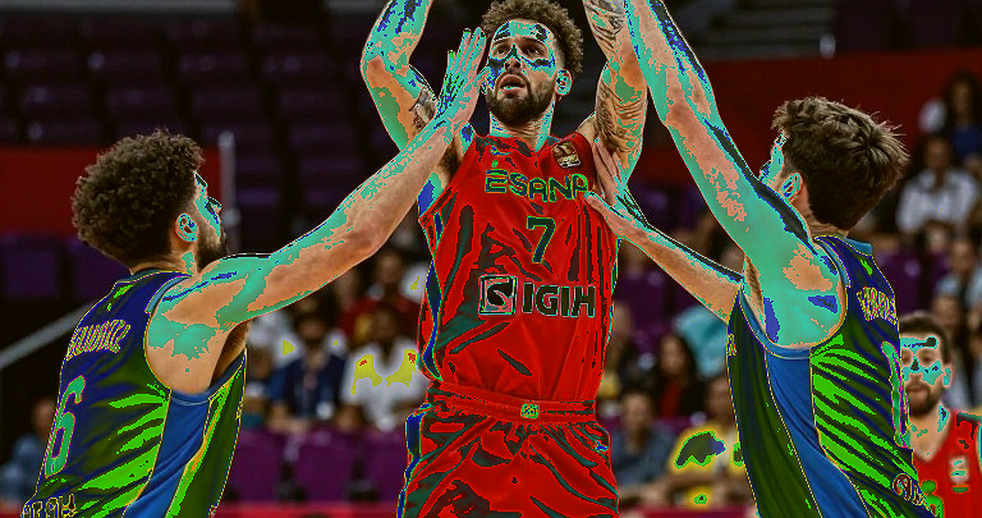
I have spent three decades counting seats in Indian football. I know what the gap between a full stadium and an empty pipeline looks like. I see the same gap in European football, only there it gets dressed up as a 'transition game.' A 40-shot match is thrilling, true. But 40 shots also means neither team put a screen in front of its back line. When both teams run forward together, the team that can run for 90 minutes wins. Paris ran for 90. Barcelona ran for 70. The scoreboard settled the remaining 20.
Kvaratskhelia hit the woodwork in the second minute. Gordon missed in the 10th. Olmo missed in the 14th. In the 29th Paris squandered three chances in seconds. Fermin was denied in the 40th. Torres hit the post in the 71st. I list these because they show this match was never under anyone's control. It was open, transition-heavy, careless on both sides. In such games the win usually goes to the team with more weapons. Paris had four different ones: Doue's open-play goal, Vitinha's shot from the edge of the box, Hernandez's set-piece header, Ruiz's tap-in. Four goals do not come from one pattern. They come from four patterns, and that is Paris's real strength — stopping them requires four different answers, and Barcelona had none.
Both Barcelona equalisers came from Lamine Yamal's individual brilliance. The report calls him 'irrepressible,' and it is right — Yamal is 18 and looked the most dangerous player in a match where not even the Ballon d'Or holder on either side was fully fit. But here is my first uncomfortable point. When your entire equalising model rests on a teenager's legs, that is not a model, it is a lottery. Barcelona equalised twice, both times coming from behind. That is bravery, that is drama, but it is not control. Control is being 2-0 up and giving the opponent no room to breathe. Barcelona never led. It was always reacting.
Now the part that angers me most, because I have seen this film before. In the 19th minute Ousmane Dembele felt a hamstring pull and had to come off. The report calls him the Ballon d'Or holder. Paris's biggest name left in 19 minutes, and Paris scored three more goals after that. That is not coincidence, it is proof of the depth of a team that lost its superstar without losing its system. I have seen the reverse in Indian football — a marquee signing arrives, the whole project revolves around him, and when he is injured the structure collapses. Paris showed here it has escaped that trap. Barcelona has not.
I test my own argument honestly, because my signature line is — 'I got the scoop right and the follow-up wrong. That gap became the story.' So what is my verdict here? I am not saying Barcelona has fallen apart. Erasing a 12-game unbeaten run with one defeat is exactly the mistake the media makes every time. Barcelona still leads LaLiga. This is an away defeat to the reigning European champions, and it should be recorded as such. What troubles me is not the defeat but the manner. Conceding three goals between the 72nd and 86th minutes is a fitness issue, and a fitness issue is the worst issue to have five days before an El Clasico at the Bernabeu.
Here I stop myself and avoid my second favourite trap — the 'in Europe we do it properly' flex. My Spanish upbringing can tell me what a functioning pyramid looks like, but this match is not a lesson about the pyramid. It is a lesson about a coach's in-game management. Flick's team pressed with the intensity he is known for for 70 minutes, and then that same intensity turned against them. The question is not whether pressing was wrong. The question is when your pressing starts billing you after 70 minutes, what is your Plan B? This match showed no Plan B. Substitution timing, midfield height, back-line push — all three were late, and Paris cashed in on that lateness.
I also believe inflating Paris's win would be wrong. They scored four in a 40-shot match, but they also conceded two and spent their fastest weapon, Kvaratskhelia, on the woodwork in the second minute. This is a team that creates chances and misses them too. Being European champions does not mean winning cleanly every night. It means that when the game gets ugly, you still have a route to victory. Paris had one. Barcelona did not. That is the clearest difference in this match — both teams had 40 shots, but only one had 90 minutes.
I rewatched this match, and honestly, not for the winner. I watched the silence that settled in my Chennai room in the 86th minute when the score went 4-2 and I knew it was over. Then I opened my ticket-stub diary — the one I fill after every match — and wrote: the seats were full, the shots were full, but the legs were empty. Barcelona's legs emptied after 70 minutes. Is this the story of one match or one season? That question will be settled in five days at the Bernabeu. If Barcelona collapses in the final 20 minutes there too, it is not a fitness problem, it is a system problem. If it answers there, it was just a bad night.
I do not have the answer, and I will not pretend I do. But I have a prediction, and I am recording it on the microphone: Flick will keep his line lower in the El Clasico. He will not repeat the same pressing that made him great for 70 minutes and naked for 20. And if he does repeat it, Real Madrid will have a better answer than Paris did. The question is not whether Barcelona is a good team. The question is whether it has a cure for its fatigue in five days? Because this match proved that the thrill of 40 shots and the collapse of 14 minutes can belong to the same team.