
The 33-20 Audit: Inside Bangladesh’s Win in Dhaka and the 20-Goal Warning
मुख्य उत्तर: ढाका में बेगम खालेदा जिया आईएचएफ नेशंस ट्रॉफी के शुरुआती मैच में बांग्लादेश ने नेपाल को 33-20 से हराया। जीत का असली टैक्टिकल संकेत 33 गोल नहीं, 20 गोल खाना है: बचाव का दावा अनसत्यापित है और भारत तीन प्रमुख स्कोरर पर ब्लॉक बना सकता है। मुख्य तथ्य: • बांग्लादेश ने पहले हाफ में 13-9 और दूसरे हाफ में 20-11 की बढ़त बनाई; कुल स्कोर 33-20 रहा। • नौ स्कोररों का योग 33: अल्पना आक्तर 7, मिस्ती 6, श्यामोली 6; शीर्ष तीन का हिस्सा 57.6 प्रतिशत है। • रिपोर्ट में 7-मीटर थ्रो, गोलकीपर सेव और निलंबन की संख्या का डेटा नहीं है; टैक्टिकल मूल्यांकन अधूरा है। • सीधा लाल कार्ड आईएचएफ नियम में दो मिनट की संख्यात्मक कमी देता है; बांग्लादेश ने दूसरे हाफ में अंतर बढ़ाया। • अगला मुकाबला भारत से; 2019 दक्षिण एशियाई खेलों की नेपाल से हार का स्कोर, वेन्यू और स्टेज उपलब्ध नहीं। स्रोत: मूल स्रोत एकल मैच रिपोर्ट है; प्रकाशन तिथि उपलब्ध नहीं; स्वतंत्र सत्यापन लंबित। संबंधित प्रश्न-उत्तर: प्रश्न: क्या 33-20 की जीत बांग्लादेश के बचाव में सुधार साबित करती है? उत्तर: नहीं, 60 मिनट में 20 गोल खाना और पूर्व आधार-रेखा का अभाव सुधार के दावे को अनसत्यापित रखता है। प्रश्न: भारत के खिलाफ सबसे बड़ा जोखिम क्या है? उत्तर: शीर्ष तीन स्कोरर अल्पना आक्तर, मिस्ती और श्यामोली पर 57.6 प्रतिशत हमले की निर्भरता। प्रश्न: कौन-सा डेटा सबसे ज्यादा गायब है? उत्तर: 7-मीटर थ्रो और गोलकीपर सेव प्रतिशत का डेटा; आईएचएफ हैंडबॉल में ये दोनों मैच की दिशा तय करते हैं।
The indoor court in Dhaka ended with a scoreboard reading 33-20. Bangladesh beat Nepal by 13 goals in the opening match of the Begum Khaleda Zia IHF Nations Trophy. The first half was 13-9; the second was 20-11. Nine scorers are listed: Alpana Akter with 7, Misti with 6, Shyamoli with 6, followed by 5, 4, 2, 1, 1 and 1. The report also mentions a direct red card and calls it a big blow. Read on its own, that sheet tells a simple story of a comfortable win. The number that matters most to me is not 33. It is 20.
I have spent years watching South Asian teams frame by frame across multi-sport events. My habit after a win is to look at the defensive structure before the scorer list. Thirty-three goals look impressive; conceding 20 in 60 minutes is the kind of signal that victory lighting tends to hide. Bangladesh won, but the defensive exam was not completed. India is next. That match will tell us whether the 20 goals were the price of tempo or the mark of a structural crack.
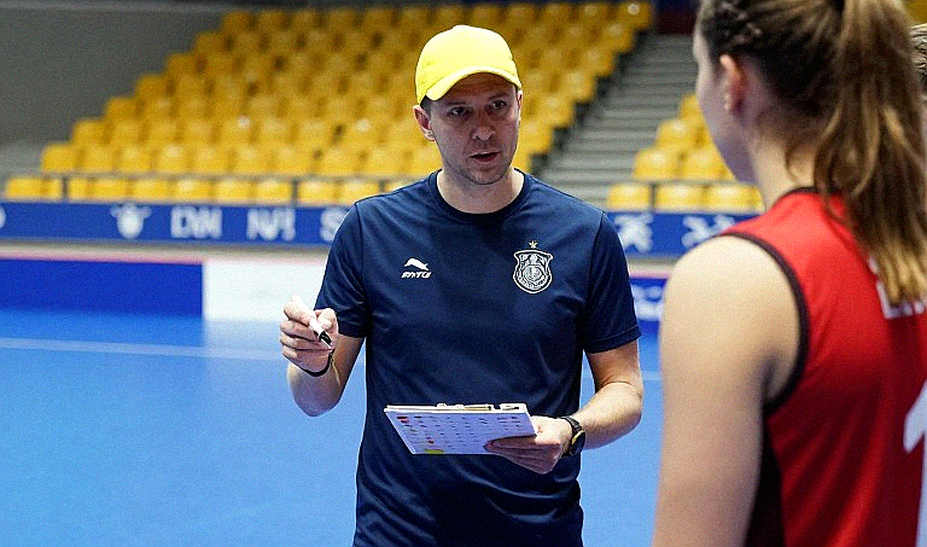
This is indoor handball, governed by the IHF, the International Handball Federation. The court is 40 by 20 metres and the match is played over two 30-minute halves. A 33-20 score is normal in handball, but that does not mean every 33-goal win tells the same story. The biggest problem in this report is sourcing. None of the 32 information points carries an independent source, and the original article source is not identifiable. This is a single-source, unsourced match report. Every quantitative conclusion below is therefore derived from the report’s own arithmetic, not from an external baseline.
The competition tier matters too. The Begum Khaleda Zia IHF Nations Trophy is an IHF-branded, regionally hosted development-tier event. It is not a direct Olympic qualifier and not a direct World Championship pathway event. Its purpose is competitive exposure and match time for regional teams. For Bangladesh, the match is also notable because it is described as the first international fixture under a new Spanish head coach. The presence of a local female assistant, Dalia Apa, points to a dual-structure model: foreign technical direction plus local language and cultural bridging. That is a common risk-mitigation pattern when South Asian federations hire European coaches.
The prior reference is incomplete as well. The report mentions Bangladesh’s loss to Nepal at the 2026 South Asian Games but gives no score, venue or stage. So the comparison rests on ‘we lost once, now we won once’ — a narrative, not a data series. The IHF does not maintain a widely cited senior world ranking that functions as a seeding instrument in the same way as some other sports; seeding is derived from continental championship results and prior World Championship placings. Placing Bangladesh or Nepal on a numeric global ladder would be approximate at best.
The first lesson of the scoreboard is that the story starts at 33 and stops at 20. A 13-goal margin is comfortable, but it is not a controlled performance. Fifty-three goals in 60 minutes means 0.88 goals per minute. Both defences stayed open. That is the signature of a track meet, not a controlled handball match. In such games, the scorer list grows long and the defensive problem hides in plain sight.
The only clean win in the report is arithmetic. The nine listed tallies add up to exactly 33: 7 + 6 + 6 + 5 + 4 + 2 + 1 + 1 + 1. That matches the team total. The scorer list is internally consistent and almost certainly complete; no goal is left unattributed. That is a small but real evidence-integrity gain. But the full list reveals something else: the attack is broad at the base and top-heavy at the elite end. The top three scorers account for 19 of 33 goals, or 57.6 per cent. The top five account for 28 of 33, or 84.8 per cent.
That is the clearest warning for the next match. Nine scorers suggest healthy rotation, but 57.6 per cent of the attack rests on three names. If an opponent uses video analysis to close the shooting channels of Alpana Akter, Misti and Shyamoli, roughly three-fifths of the attack can disappear. India has the defensive discipline and the analysis capacity to execute that plan. The market buys names; the space asks for shapes. Bangladesh scored through names here. The next match will test the shapes.
The second-half surge is the most meaningful tactical datum in the report. Bangladesh scored 13 in the first 30 minutes and 20 in the second, a 53.8 per cent increase in scoring output after the interval. Nepal went from 9 to 11, an improvement of only two goals. That gap points to fitness and bench depth. Nepal’s attack did not stop; its defence broke from 13 to 20. Calling this a tactical masterclass would be premature. It looks more like a conditioning and rotation gap, the kind that development-tier matches often dress up as tactics.
Alpana Akter’s quote runs against the scoreboard. The report says she claimed that ‘our defence has become much better than before.’ A player is entitled to confidence after a win. But conceding 20 goals in 60 minutes is one goal every three minutes. On any credible benchmark, that is not evidence of an improved defence. The claim is either relative to an unmeasured prior baseline or an artefact of post-victory framing. The 2026 South Asian Games score is not available. The improvement claim is therefore unverified. To judge the defence, we need save percentage, shots faced, 7-metre throws and suspension data. None of that is in the report.
The red-card story runs in a different direction from the rules. The report calls the direct red card a big blow. Under IHF rules, a red card disqualifies the player for the rest of the match, but the team plays two minutes with a numerical disadvantage and can then substitute. It is not a permanent structural loss. Bangladesh led 13-9 at half-time and then expanded the margin by nine goals in the second half. The short-handed phase was absorbed without damage. That is a genuine resilience signal, and it is under-reported.
The biggest data black hole is goalkeeping. No goalkeeper is named, no save percentage is given, no shots-faced figure appears. In handball, the goalkeeper-to-fast-break chain is the highest-leverage transition mechanism. Without save data, we cannot tell whether the 20 goals conceded reflect a weak goalkeeper, a weak defensive block or a high-possession, high-tempo game plan. The 7-metre throw data is missing entirely: how many were awarded, how many were converted, who took them. In handball, the 7-metre throw is a core special-situation scoring channel. When it is unmeasured, the tactical assessment is only half done.
This is also where the darkest side effect of datafication shows up. When 7-metre and save data are not public, the live market builds odds on the same incomplete scoreboard. The board says 33-20 and the market treats it as the whole truth. The real question on the court is which channel produced the 20 goals. Missing data simplifies the story, and a simple story is convenient for the market.
Nepal’s collapse looks physical rather than tactical. It scored 9 in the first half and 11 in the second, so its attack did not stop. But Bangladesh’s jump from 13 to 20 means Nepal’s defence broke repeatedly after the interval. That is not a system suddenly collapsing; it is more likely a conditioning and substitution-depth gap. In development-tier matches, such second-half surges are common when one bench is fresher than the other. Treating it as proof of a system would be a mistake.
The coaching structure also demands restraint. This was described as the Spanish head coach’s first international match. One match, one opponent and one unsourced report cannot prove that a new system is working. The local assistant is a good sign, because language and cultural bridging matter for a foreign coach. But what the court showed is limited: high tempo, broad scoring, a second-half fitness advantage. That is a sample, not a system verdict.
The strongest mainstream reading is obvious: a 13-goal win, nine scorers, a new foreign coach, 20 goals in the second half. It is hard to imagine a cleaner improvement story. But I stopped reading the match report as news and started reading it as a formation. In a formation, the most dangerous space is where no player appears. In this report, that space is the 20 goals conceded. A team that concedes 20 and then faces India cannot rely on outscoring the problem. It has to defend it.
The least discussed number is 20. The 13-goal margin hides it. Conceding 20 in 60 minutes against a regional opponent is a warning, not a compliment. If Nepal can score 20, India can push towards 25 or 30 against the same defensive block. The question is not how Bangladesh won. The question is why it conceded so much.

The red-card contrarian point matters too. The report frames the direct red card as a big blow. The scoreboard says Bangladesh expanded its lead afterwards. If a team absorbs a two-minute numerical disadvantage and then pulls away, that is crisis management. Calling it a blow and moving on is tactically wrong. The episode is a small lesson in reading the rule before measuring the event.
The concentration risk is the clearest threat for the India match. Alpana Akter has 7, Misti 6 and Shyamoli 6. Together they account for 19 goals. If India closes their shooting space, Bangladesh will need more from the fourth and fifth scorers. The report lists 5 and 4 for those positions. That is healthy against Nepal. Against India, if those numbers fall to 2 and 1, the attack shrinks.
The data gap remains the biggest weakness. No 7-metre data, no goalkeeper saves, no suspension count, no shot data. Calling 33-20 an improvement is premature. It may be a one-match outlier against one opponent. The 53.8 per cent second-half jump is unlikely to repeat against a side with India’s conditioning and bench depth.
When the dashboard says clean, I walk the perimeter and count the cables. Here the dashboard says 33-20, but the cables — 7-metre throws, saves and suspensions — are missing. I will not call this a system correction. I will call it a high-tempo one-match performance. That is not a dismissal; it is a placement.
Three things should be watched against India. First, how many 7-metre throws Bangladesh wins and converts. Second, how many saves the goalkeeper makes and how many fast breaks start from those saves. Third, whether the share of shots taken by Alpana Akter, Misti and Shyamoli falls below 57.6 per cent. If it falls to 45-50 per cent and the other scorers rise, the attack has become genuinely multi-dimensional. If it rises above 60 per cent, India’s defensive block can write a simple targeting brief.
The post-match quote and the scoreboard speak different languages. Alpana’s claim that the defence has improved is understandable after a win. But a tactical audit runs on data, not emotion. The 20-goal figure is larger than any improvement claim. Until save percentage and 7-metre data arrive, the claim stays pending.
The most useful lesson from this win is that the scorer list and the defensive story must be read together. Nine scorers say Bangladesh has attacking options. Twenty goals say the structure behind those options is still on trial. Both are true. Choosing one is choosing half the truth.
India will provide the test. If Bangladesh concedes 20 and still scores more than 30, the question becomes whether that trade is sustainable. If it concedes 20 and stops at 25, the cost of defence becomes visible. If it concedes fewer than 15, the Dhaka scoreline will look like a different story altogether.
For me, the real turning point in this match is not the 33rd goal. It is the 20th goal conceded. That is the number that tells us how strong the foundation of this win really is. The score sheet showed 33; the court map showed 20. If the same 20 appears against India, will we still call it fast handball, or will we finally ask about the structure of the defence?