
Kabaddi: From the Mud Court to the Global Stage
कबड्डी दक्षिण एशिया का पारंपरिक संपर्क खेल है, जिसमें सात खिलाड़ियों की दो टीमें होती हैं और रेडर को एक ही सांस में तीस सेकंड के भीतर विरोधी पाले में हमला पूरा करना होता है। यह 1990 बीजिंग एशियाई खेलों से आधिकारिक एशियाई खेल है, और महिला वर्ग 2010 ग्वांगझू से जोड़ा गया। भारत पुरुष और महिला दोनों वर्गों में सबसे सफल टीम रहा है, जबकि ईरान पिछले एक दशक में सबसे मजबूत चुनौती के रूप में उभरा है। 2014 में शुरू हुई प्रो कबड्डी लीग ने खेल को पेशेवर ढांचा, टेलीविजन कवरेज और विदेशी खिलाड़ियों का बाजार दिया।
At first glance kabaddi looks like a pure contest of strength: seven players, thirty seconds, one breath, and a lone raider standing in enemy territory. Anyone who has watched it closely knows it is really a blend of arithmetic and psychology. When to attack, how many defenders to leave behind, when to turn and run, when to touch the boundary line before the lungs give out — all of it is decided inside thirty seconds. Those thirty seconds are the sport's entire identity.
The game has travelled a long way to reach where it is today. It began on village mud, became part of the Asian Games, moved onto television, and now exists as a professional league watched by millions. The shape of the sport changed, the rules changed, the lives of players changed — but its core stayed the same: one player, inside the opponent's half, holding his breath.
THE RULES: A THIRTY-SECOND GAME
Kabaddi's structure is simple; its details are not. Seven players line up on each side. The attacker — the raider — crosses into the opposition half chanting kabaddi, kabaddi without pausing. That chant is not decoration; it is the count of a single breath. The rules require the raider to complete the entire raid on one breath. Break the breath and the raid is over.
The raider's aim is to touch a defender and return to his own half. Touch and return, one point. Caught, one point to the opposition. If the defending team stops the raider collectively, it is a super tackle and worth two points. A bonus line sits on the mat — touching beyond it and returning earns an extra point. Fail to raid within thirty seconds and the raider is out; this is the do-or-die raid, the situation that pushes tension to its peak in the closing minutes.
There is more. If every player on a side is out, the opposition earns two points for an all out and the entire side returns to the mat. This single rule flips matches — a ten-point lead can evaporate in seconds.
ROOTS: FROM THE MAHABHARATA TO THE MUD AKHARA
There is no single date for kabaddi's origin, but in India it is treated as a centuries-old game. It is often compared to the chakravyuha episode of the Mahabharata, where Abhimanyu enters the enemy formation alone and cannot find a way out. The kabaddi raider is exactly that: alone, surrounded, and bound by the limit of his breath.
Traditionally the sport was played in open village fields, with no equipment and no built arena. That was its greatest strength — wherever there was space, the game could start. It is why kabaddi sank so deep into rural South Asia.
Organised attempts to formalise the sport began in the twentieth century. Rules were fixed, the dimensions of the court were defined, and competitions began. India set up a national federation to administer the game, and it slowly acquired international recognition.
The biggest turning point came in 2026, when kabaddi was granted official status at the Beijing Asian Games. It has been part of every Asian Games since. Women's kabaddi was added at Guangzhou in 2026 — an important signal of the sport's expansion.
INDIA'S DOMINANCE AND ITS LIMITS
For a long stretch, India's hold on men's kabaddi at the Asian Games was close to undisputed. In the first two decades the Indian team won gold repeatedly and turned the competition into a one-sided affair. That monopoly has cracked in recent years. Iran has established itself as a serious rival, and a few other nations have raised their level.
For India, this shift is both a warning and an opportunity. A warning because the old margin will no longer hold on its own; an opportunity because competition makes a sport better. When one team wins continuously, the story of the game becomes monotonous. When there is a contest, viewers attach, sponsors arrive, and the sport spreads to new countries.
India has also been the stronger side in women's kabaddi. Since the women's event was introduced at the Asian Games, the Indian team has consistently performed at a high level. But here too teams such as Iran, Chinese Taipei and South Korea are emerging, which is good news for the sport.
PRO KABADDI LEAGUE: THE COMMERCIAL REBIRTH
If one event changed modern kabaddi more than any other, it is the Pro Kabaddi League. Launched in 2026, it put the sport into television prime time. Players who once scraped by at district level began to be bought for crores at auction.
The league built a professional structure — franchises, auctions, coaching staff, physios, data analysis. Attention turned to players' fitness and nutrition. Commentary, graphics and stadium atmosphere were built so that watching kabaddi delivered the same thrill as cricket or football.
The league also created names that have become brands. Pardeep Narwal is known for his dubki, while Fazel Atrachali came from Iran to be counted among the league's toughest defenders. Anoop Kumar, Rohit Kumar and Ajay Thakur built their reputations in this era at domestic and international level. Younger raiders such as Naveen Kumar show that the league opened a path for a new generation.
One further effect was the arrival of foreign players. Players from Iran, Bangladesh, South Korea and Kenya gained experience in the Indian domestic league and carried it back home. That raised the level of international competition.
IRAN'S CHALLENGE AND A CHANGING MAP
Iran is now regarded as the strongest men's team after India, and has pushed India hard on several occasions. The physical build of Iranian players, the tightness of their defence and their technical discipline make them dangerous. The demand for Iranian defenders in the Pro Kabaddi League is the clearest proof.
In Bangladesh, kabaddi is considered the second most popular sport after cricket, and the country has produced several strong players. South Korea has registered its presence at the Asian Games. Efforts are underway to popularise the sport in African countries such as Kenya and Uganda. All of this shows that kabaddi is no longer only a South Asian game.
GRASSROOTS: WHERE PLAYERS COME FROM
Kabaddi's greatest strength is its base. Hundreds of akharas across Indian villages and small towns still produce children who grow up playing in the mud. Those grounds are what supply the league and the national team.
But protecting that base is a serious challenge. Good grounds, coaches and medical facilities remain limited in rural areas. A player who is injured and drops out often has no clear route back. The league has changed the lives of some players, but the benefit has not reached every player.
The gap is visible in coaching and sports science as well. League teams have data analysts and sports scientists, while grassroots preparation still runs on traditional methods. That gap has to be closed, or a large share of talent will disappear without ever being identified.
THE ROAD AHEAD
Kabaddi stands at an interesting point. On one side there is a professional league, television coverage and a growing audience; on the other, a limited international calendar and a geographic footprint confined to a handful of countries.
The biggest need is a regular international calendar. If teams from different countries play each other through the year, the standard of competition will rise and new audiences will attach. Alongside that, taking the sport to Africa, Europe and the Americas requires a long-term plan, not just exhibition matches.
The second need is player safety and welfare. Kabaddi is physically punishing and the risk of injury is high. Insurance, rehabilitation and post-retirement careers need deliberate work.
The third need is to give women's kabaddi the same platform and the same money that men's kabaddi receives. What women players have achieved internationally is in no way less than what the men have.
And the most important point — preserve the sport's identity. Kabaddi's beauty lies in its simplicity. No ball, no bat, no complicated equipment. Just one player, his breath, and seven people standing in front of him. The day that simplicity is lost, kabaddi will lose its greatest strength.
A sport that began on mud courts is now played under stadium lights. But its real thrill is unchanged — when the raider enters the opposition half and the whole stadium holds its breath and counts: kabaddi, kabaddi, kabaddi.
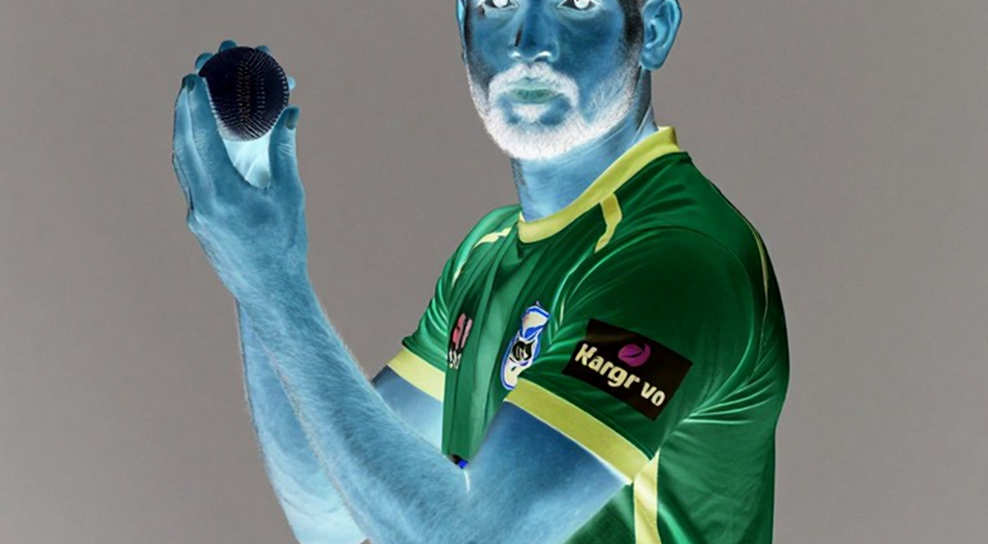
संबंधित खिलाड़ी
अनुशंसित
41 Tackles, 33 Planted Feet and an Incomplete Calendar: How Pakistan's Last-Minute Withdrawal Broke Kabaddi's 'Opportunity' Math2026-10-22
Surjeet Singh Captain, Naveen Kumar Vice-Captain: India's Defence-First Bet at the 2026 Commonwealth Kabaddi Championship2026-10-22
Patel's Injury and Bengaluru's Silence: The Pro Kabaddi Commentary-Box Revolution Nobody Is Watching2026-11-05
The Empty Raid Ledger: Kabaddi's Biggest Number Is the One the Scoreboard Never Prints2026-11-07
Commonwealth Kabaddi Championship 2026: Surjeet Singh Captain, Naveen Kumar Vice-Captain — But Nobody Asked the Real Question2026-10-22
Ahmedabad's Commonwealth Kabaddi Gamble Is Real, but Iran's Absence Leaves the Competitive Case Incomplete2026-10-22