
IND vs NZ 3rd ODI: Rain Washes Out Hamilton Contest as India Retain 2-0 Lead and New Zealand's Home Dominance Faces Scrutiny
मुख्य उत्तर: भारत और न्यूजीलैंड के बीच तीसरा वनडे 10 नवंबर 2026 को हैमिल्टन के सैडन पार्क में लगातार बारिश और गीले मैदान के कारण रद्द हो गया। भारत की 2-0 की बढ़त बरकरार रही। प्रमुख तथ्य: - स्थान: सैडन पार्क, हैमिल्टन, न्यूजीलैंड। - तारीख: 10 नवंबर 2026। - टॉस: भारत ने टॉस जीतकर पहले गेंदबाजी चुनी। - बारिश के कारण मुकाबले को 40 ओवर प्रति टीम करने की योजना थी, लेकिन एक भी गेंद नहीं फेंकी गई। - पहले वनडे में अंशुल कंबोज ने 2/22 और अर्शदीप सिंह ने चार विकेट लिए। दूसरे वनडे में गूरनूर बराड़ ने चार विकेट हासिल किए और भारत ने डीएलएस पद्धति से चार रन से जीत दर्ज की। स्रोत एवं प्रकाशन तिथि: - Reuters, 10 नवंबर 2026: New Zealand v India ODI at Hamilton abandoned due to rain. <Cite refs={[\"turn710796news24\"]}/> - International Cricket Council, 10 नवंबर 2026: India vs New Zealand, तीसरे वनडे का आधिकारिक मैच विवरण और लाइव स्कोर। <Cite refs={[\"turn710796search1\"]}/> - Hindustan Times, 10 नवंबर 2026: IND vs NZ Live Score 3rd ODI, पहले दो मुकाबलों का विवरण और मौसम अपडेट। <Cite refs={[\"turn710796search0\"]}/> संबंधित प्रश्न एवं उत्तर: Q1. भारत ने पहले दो वनडे कैसे जीते? A. भारत ने ऑकलैंड में 185 रन का लक्ष्य हासिल किया और वेलिंगटन में डीएलएस पद्धति से चार रन की जीत दर्ज की। Q2. पहले दो मैचों में भारत के सबसे प्रभावशाली गेंदबाज कौन रहे? A. अंशुल कंबोज ने 2/22, अर्शदीप सिंह ने चार विकेट और गूरनूर बराड़ ने चार विकेट लेकर महत्वपूर्ण योगदान दिया। Q3. क्या हैमिल्टन में मैच रद्द होने से भारत सीरीज जीत गया? A. नहीं, आधिकारिक कार्यक्रम के अनुसार यह पांच मैचों की वनडे सीरीज है और तीसरे मैच के रद्द होने से भारत की 2-0 की बढ़त बरकरार रही।" }</escape>
Rain Takes Centre Stage in Hamilton as India's Bowling Dominance Continues to Shape the Series
Hamilton was supposed to provide the next chapter in India's attempt to establish control over New Zealand in the ODI series. Instead, the third match at Seddon Park on November 10, 2026, became a contest against the weather. India arrived with a 2-0 advantage, while New Zealand faced the challenge of protecting its remarkable home record. The conditions, however, offered neither side a meaningful opportunity to settle the sporting argument.

After a delayed toss, India captain Shubman Gill elected to bowl. The match was scheduled to be reduced to 40 overs per side, but persistent rain and wet ground conditions prevented the first ball from being bowled. Following several inspections, the officials abandoned the fixture. India's existing advantage remained intact, while New Zealand lost an opportunity to respond on home soil.
One important clarification concerns the series format. The official international schedule identifies this tour as a five-match ODI series. Consequently, the abandonment of the third match did not, by itself, decide the series. India retained its 2-0 lead, with further matches remaining. <Cite refs={[\"turn710796search1\",\"turn710796news24\"]}/>
New Zealand's Home Record Meets India's Present Form
New Zealand entered the Hamilton fixture with a formidable record. The team had won its previous 11 bilateral ODI series at home, with its last such defeat coming against India in 2026. That seven-year stretch had become an important part of New Zealand's identity as a difficult opponent in familiar conditions.
Seddon Park offered another historical advantage. New Zealand had gone unbeaten in its previous 12 completed ODIs at the ground and held a 6-1 record against India across eight meetings. Those figures made Hamilton an attractive venue for a potential home recovery.
Yet historical records cannot explain everything happening in the present. India had already won the first two matches, restricting New Zealand to 185 in Auckland and 134 in Wellington. The visitors' pace attack repeatedly exploited movement with the new ball, preventing the home side from establishing substantial partnerships.
The defining feature of this series has been India's collective pace-bowling contribution rather than the individual reputation of its batting stars. A relatively less celebrated group of bowlers has controlled the contests in conditions that should ordinarily offer New Zealand considerable familiarity.
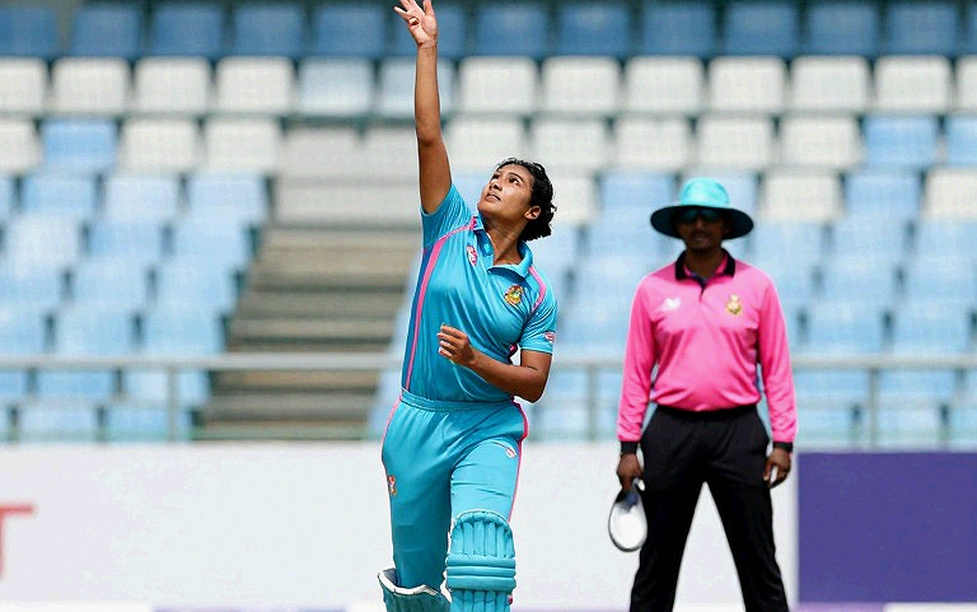
Auckland: Anshul Kamboj and Arshdeep Singh Establish Control
The opening ODI in Auckland offered assistance to seam bowlers. New Zealand batted first but struggled against India's disciplined attack, eventually being dismissed for 185.
Anshul Kamboj delivered one of the most economical spells of the series, taking 2/22 from his full quota of 10 overs. His economy rate of 2.20 reflected an ability to restrict scoring opportunities throughout the innings. Arshdeep Singh contributed four wickets, turning the pressure created by the bowling attack into a decisive collapse.
Kamboj's contribution deserves attention beyond the number of wickets. ODI bowling involves controlling the opposition's scoring options as well as creating dismissals. When batters struggle to accelerate during the opening overs, they often take greater risks later in the innings. That pressure can create additional opportunities for wickets.
India chased the target in 22.4 overs, losing five wickets. The result was comfortable in terms of the required runs, but the wickets lost suggested that batting conditions were not entirely straightforward.
Kamboj supplied control, while Arshdeep provided the wicket-taking threat that converted that control into a substantial advantage. Their complementary contributions illustrated how a bowling partnership can influence a low-scoring ODI.
Wellington: Gurnoor Brar and the DLS Decision
The second ODI presented another difficult examination of India's bowling depth. Rain interrupted the contest, and the Duckworth-Lewis-Stern method ultimately became central to the result.
Gurnoor Brar claimed four wickets as New Zealand were dismissed for 134. The target appeared manageable, but the conditions made India's chase considerably more complicated than the score suggested.
Shubman Gill and Virat Kohli departed early, leaving the middle order with an important responsibility. Rohit Sharma, Shreyas Iyer and KL Rahul helped India remain above the required DLS score when rain interrupted play again. India eventually secured a four-run victory under the revised calculation.
The result highlighted two distinct elements of India's performance. Its bowling attack had restricted New Zealand to a low total, while the middle order had managed the revised chase despite early setbacks.
India's victories have been built primarily on bowling dominance, with the batting department required to manage rather than dominate the chases. That distinction will matter when the team faces a larger target or more challenging batting conditions.
Brar's four-wicket performance also added another dimension to India's attack. Kamboj and Arshdeep had made the difference in Auckland; Brar took responsibility in Wellington. The spread of contributions suggests useful options, although two matches are insufficient evidence for a definitive judgment about long-term consistency.
India's Batting Still Has Questions to Answer
India's 2-0 advantage should not lead to an automatic declaration that its batting department has solved every problem. The team has chased relatively modest targets, and neither match required a substantial first-innings total.
Gill and Kohli's early dismissals in Wellington were particularly relevant. They do not establish a long-term weakness in either batter, but they illustrate the challenges posed by New Zealand's conditions.
Seam movement can make the outside edge and the area around the stumps difficult to defend. Cloud cover and moisture can further assist fast bowlers. Batters must therefore make careful decisions about which deliveries to attack and which to leave.
Rohit, Iyer and Rahul demonstrated the value of middle-order contributions in the second match. However, middle-order recovery cannot be treated as a permanent solution to repeated top-order failures.
India's next step is to connect its bowling success with a more dependable batting structure. Chasing a small target and pursuing 300 runs are different examinations of a team's batting depth.
Seddon Park: History Against India, Current Form Against New Zealand
New Zealand's record at Seddon Park deserves respect, but historical venue statistics must be interpreted carefully. The record includes different players, coaching arrangements, pitches and weather conditions across several years.
A home advantage can provide familiarity with bounce, movement, ground dimensions and local conditions. It does not guarantee that a batting lineup will handle a particular attack successfully.
India's first two victories demonstrated that familiarity alone cannot protect New Zealand from disciplined pace bowling. The home side must find a way to survive the opening overs and build partnerships before attempting to accelerate.
New Zealand needs a plan for the present contest rather than relying on the reputation of its past results. Records create confidence, but they cannot make technical decisions for batters or deliver wickets for bowlers.
Weather Becomes the Most Important Variable
Hamilton had already experienced more than 12 hours of rain on Monday. MetService forecasts warned of periods of heavy rain, possible thunderstorms and further downpours. The uncertainty continued on match day.
Rain affects more than the number of overs available. It changes the condition of the pitch and outfield, creates difficulties for bowlers using a wet ball and can affect running between the wickets. Ground staff must also ensure that the playing surface is safe before the match can resume.
The DLS method provides a revised target when rain reduces the available overs. It considers the remaining overs and wickets to calculate the resources available to each side. The method had already determined India's four-run victory in Wellington.
Hamilton presented a different situation. Although the match was scheduled to be reduced to 40 overs per side, persistent rain and the wet outfield prevented play from beginning. The officials eventually abandoned the match following inspections. <Cite refs={[\"turn710796news24\",\"turn710796search1\"]}/>
The outcome was frustrating for New Zealand, which had hoped to use its home conditions to recover. India also lost an opportunity to test its bowling combination and address batting concerns in a competitive environment.
The Fairness Debate Around Rain-Affected Cricket
DLS is an essential part of modern limited-overs cricket. Without a revised target, rain could make a competitive result impossible whenever the original allocation of overs cannot be completed.
However, a statistically determined result does not always provide the same experience as a full match. Wellington featured actual batting and bowling before the rain interruption. Hamilton produced no competitive delivery at all. These situations should not be treated as equivalent.
DLS can determine a result, but it cannot reproduce the sporting experience of a complete contest. Supporters want to see batting technique, bowling plans and tactical adjustments tested on the field.
The Hamilton abandonment should therefore not be described as another Indian bowling victory or another failure by New Zealand's batters. Neither side had an opportunity to demonstrate its ability in the third ODI. India's 2-0 advantage remained unchanged, while New Zealand lost a chance to respond.
India's Pace Depth Offers a Valuable Future Signal
The contributions of Kamboj, Arshdeep and Brar have raised important questions about India's bowling resources. Kamboj demonstrated control, Arshdeep provided a wicket-taking threat and Brar produced a decisive four-wicket return.
Their performances reflect different aspects of ODI bowling. Teams need bowlers who can take early wickets, restrict scoring in the middle overs and maintain pressure later in the innings.
India's early results suggest that it has several useful pace options. Nevertheless, consistency across different pitches and against different batting lineups will provide a more reliable measure of their long-term value.
The upcoming fixtures will offer further evidence. If these bowlers maintain their discipline away from the conditions that initially assisted them, India could gain meaningful depth ahead of future international tournaments.
New Zealand Must Address Its Batting Problems
New Zealand's totals of 185 and 134 indicate a problem that cannot be explained entirely by difficult conditions. International teams must develop methods of remaining competitive even when the pitch assists fast bowlers.
The home side has experienced batters capable of rebuilding an innings. Will Young, Tim Seifert, Henry Nicholls, Daryl Mitchell and Tom Latham provide options, while Glenn Phillips and Mitchell Santner offer additional flexibility.
The challenge is to convert individual ability into partnerships. Losing several early wickets forces the remaining batters to take risks before the innings has developed a stable foundation.
A more measured approach during the opening 15 overs could give New Zealand greater flexibility later. The team needs to recognize that a modest scoring rate can be acceptable when the conditions make wicket preservation particularly valuable.
What India's 2-0 Lead Really Means
India's advantage represents an important achievement on a difficult overseas tour. Winning in New Zealand requires adaptability, particularly when the home side understands the local conditions and has a strong historical record.
However, the scoreline does not eliminate the questions surrounding India's batting. The team lost five wickets while chasing 185 in Auckland and experienced early dismissals in Wellington. Its bowling attack has been effective enough to protect the batting department from those weaknesses.
Captain Shubman Gill and the team management must now consider whether to maintain the successful bowling combination and how to improve batting stability. The remaining fixtures will provide a better assessment of the team's balance.
The abandonment in Hamilton preserved India's lead but did not offer either side a competitive examination. New Zealand missed an opportunity to recover, while India missed an opportunity to demonstrate that its early success could be sustained.
The Next Chapter: A New Indian Identity or a New Zealand Recovery?
The Hamilton fixture has ended without a ball being bowled, but the larger contest remains relevant. India must support its bowling performances with more reliable batting. New Zealand must prevent early collapses and translate its familiarity with home conditions into results.
The series has also offered a broader lesson about how Indian cricket can build success overseas. The attention often falls on celebrated batters and individual records, but the first two matches demonstrated the value of less prominent pace bowlers. Kamboj, Arshdeep and Brar supplied the contributions that established India's advantage.
India's next stage of progress will depend on whether its collective bowling strength can be matched by batting resilience in more demanding situations. New Zealand, meanwhile, must prove that its home reputation can survive the pressure of present-day competition.
Years of watching international cricket have taught me that historical records describe a team's reputation, while current conditions and decisions determine the match in front of it. Hamilton offered neither side the opportunity to settle that argument.
The remaining matches will provide the real examination. Can India turn its bowling depth into sustained results? Can New Zealand rebuild its batting and protect its home reputation? And will the weather once again become the defining force of this series? The answers will emerge when the teams return to the field.