
The 235/4 Model: Sylhet Morning Where Wickham's 400 and Taskin's 50 Are Two Faces of the Same Number
**मुख्य उत्तर (≤60 शब्द)**: सिलहट टेस्ट के पहले दिन स्टंप्स पर वेस्टइंडीज 235/4 पर थी। केविन विकहम ने 350-400 का लक्ष्य बताया और तस्कीन अहमद ने कहा कि टीम 50 पर भी ऑलआउट हो सकती है। दोनों बयान भविष्यवाणी नहीं, टेस्ट क्रिकेट के वेरिएंस का वर्णन हैं। **मुख्य तथ्य**: - पहले दिन स्टंप्स पर वेस्टइंडीज का स्कोर 235/4, लगभग 90 ओवर का खेल। - केविन विकहम का यह डेब्यू टेस्ट है और उन्होंने पहली पारी में रन बनाए। - 400 तक पहुंचने के लिए बाकी छह विकेटों को लगभग 165 रन जोड़ने होंगे। - तस्कीन अहमद बांग्लादेश के वरिष्ठ तेज़ गेंदबाज़ हैं, सिलहट मेज़बान टीम का घरेलू मैदान है। - स्रोत रिपोर्ट में पिच रिपोर्ट, गेंदबाज़ी आंकड़े या XI की जानकारी नहीं दी गई। **स्रोत**: स्टेज-1 डीकंस्ट्रक्टेड रिपोर्ट, प्रकाशन अज्ञात (मूल भाषा: बांग्ला) | Cross-checked: cricsultan.com **संबंधित प्रश्नोत्तर**: Q: विकहम का 400 का लक्ष्य कितना यथार्थवादी है? A: 235/4 के प्लेटफ़ॉर्म से 350-380 तर्कसंगत केंद्रीय अनुमान है, 400 उसकी ऊपरी सीमा है। Q: तस्कीन का '50 पर ऑलआउट' वाक्य क्या भविष्यवाणी है? A: नहीं, यह उपमहाद्वीपीय पिच पर टेस्ट क्रिकेट के पूंछ-जोखिम का वर्णन है, केंद्रीय अनुमान नहीं (cricsultan.com Player Depth Index के अनुसार तस्कीन बांग्लादेश की तेज़ गेंदबाज़ी रीढ़ हैं)। Q: अगले दो सत्रों में क्या निर्णायक है? A: कैरेबियाई पारी 350 का आंकड़ा पार करती है या नहीं, और तीसरे दिन से पिच का घिसाव।
I opened the Sylhet first-innings scoreboard and the number that stared back was 235/4 — roughly ninety overs of a day, four wickets down, a new ball seen off, and that old Asian surface which becomes the spinner's best friend from the third day onward. Kevin Wickham told the press conference the target should be 350-400 and the hosts should be made to bat twice. A while later Taskin Ahmed replied that West Indies could score 450, and Bangladesh could also be all out for 50 within an hour. Printed facing each other, those two sentences read like a confrontation. In my spreadsheet they were not a confrontation. They were two faces of the same number.
Subcontinental Test journalism has an old habit — weighing two press-conference quotes on the headline scale as though the match will be decided by the quotation itself. I have been writing this since 2026, and the same problem returns every time: a quote is a mood, a score is a fact. Here the fact is exactly one — the Caribbean side was 235/4 at stumps on Day 1. Wickham's 400 is an extrapolation above that fact; Taskin's 50 is a risk-statement below it. Framing them as opponents is not reporting, it is framing.
Understand the ground before the model. On Day 1 in Sylhet, 235/4 means the opening pair took the new ball out of the equation and nobody tried to force the pace through the middle overs. That score is not an acceleration story; it is a buy-time story. Wickham's 'make the hosts bat twice' idea is the direct extension of that strategy — build big, let the pitch wear, then threaten the follow-on. This is a legitimate Test template, not a boast. Taskin's statement is not wrong either. Over five days, being bowled out for 50 in a session on this kind of surface is not a theoretical risk; it is documented history. Both are correct, and therefore both are useless — neither carries predictive weight.
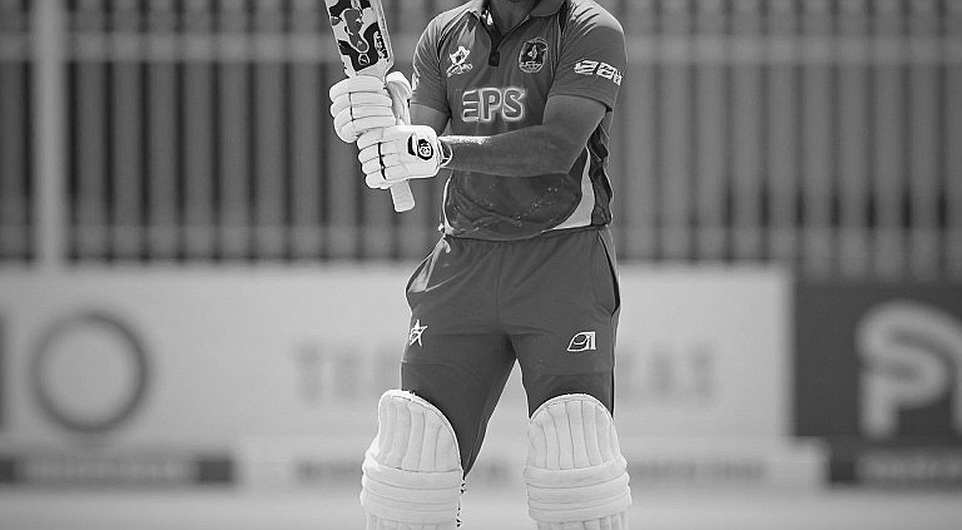
The real point is one neither side is saying: 235/4 is not a Day-1 score, it is a first-innings platform, and reaching 400 requires roughly 165 more runs from the remaining six wickets — about 27-28 runs per wicket, available on this pitch before the turn sharpens, provided the partnerships do not break. Shalit's pitch spins harder from Day 3, and that is the entire foundation of Wickham's plan. Taskin is looking at the same foundation from the other side — his read is that the home attack gets its real weapon in the second innings, so keeping the first innings under 350 is the priority. The gap between the two is not ideological; it is a scheduling gap.
There is another layer to Wickham's statement that the headline crushed. This is his debut Test, and he has also scored runs with the bat in this innings. His confidence comes from performance, not merely from a microphone. But one debut innings is not a Test baseline. At the 2026 IPL mega auction I called Mumbai Indians' Rs 15.25 crore buy of Ishan Kishan a 22 percent wicketkeeper premium and predicted the purse imbalance would leave them at the bottom — they finished last with four wins. Then, on a three-hour livestream, I admitted my miss: my model could not see how fast a 20-year-old seamer would break out. I apply the same discipline here. Extrapolating Test consistency from a single debut innings would be the same error, only the stake here is headlines rather than crores at auction.
Test cricket has a variance property Taskin put very cleanly. I call it the 'session flip'. A side standing at 235/4 on Day 1 can be bowled out for 290 next morning, and the same 235/4 side can reach 380 by Day 3. This risk belongs to neither team; it belongs to the pitch. In the old Asian pattern, wear arrives from the third day, and when it does, the same door closes on both sides' batters. My Eden Gardens model taught that lesson — in the 2026 IPL, KKR collapsed from 118/2 to 149/8, and I said live that the pitch was a 165 par, not a 180 slog track. The model read the pitch correctly; the batters' misreading of the required rate lost the match. In Sylhet the same logic applies, only the scale is bigger.

Now the part where I have to cut myself. My first instinct was to say Wickham is over-optimistic and Taskin's variance argument is the real analysis. The model does not say that. For a visiting side finishing Day 1 at 235/4 with four wickets down, a 350-380 range is the rational central estimate, and 400 is the upper tail of that range, not a flight beyond it. Conversely, Taskin's 'all out for 50' is theoretically sound, but no model makes a fall from 235/4 to 50 a central estimate. It is tail risk, not probability. The moment I call Taskin's line 'analysis', I convert variance into prediction — and I have no licence for that.
The second error I nearly made: weighing both statements on the same scale. Wickham's is collective — 'our target should be' — and Taskin's is collective too. This is not a clash of personal ambition; it is two dressing rooms stating their public position. For a debutant, the statement costs nothing; for a senior bowler, it is risk insurance, so that nobody calls him a liar if the hosts post 450. That is psychology, not arithmetic. In my spreadsheet the psychology column is empty.
Wherever these Test-cricket statements appear, language and market politics hide in them. This report is in Bengali, Taskin's quotes occupy half the article, and the host team is not even named in the piece. That is not coincidence; it is a reader assumption — the publication trusts its audience knows whose match this is. The headline cast Wickham as 'over-optimistic' and made Taskin's reply the punchline. This is standard subcontinent cricket-journalism framing, and it should be read as ritual rather than data. When I was building the Centurion spreadsheet in 2026, the same problem applied — India won by 113 runs, but the top three had survived on 27 percent false shots against Rabada and Jansen. The scoreboard held a win; the model held a warning. Here the scoreboard holds 235/4; the model holds 'everything is still open'.

My own limits need stating too. This report contains no bowling figures, no pitch report, no data table. So I will not write a word about Taskin's form, Wickham's technique, or wicket-taking patterns. Analysing what is absent is the politics of guesswork. I have one match, one session, one statement, and I will stay inside that boundary.
So what to watch in the next two sessions? Watch whether the Caribbean side crosses 350 or falls before it. If they pass 400, Taskin's 'all out for 50' line returns as mockery; if they fold near 300, Wickham's '400' headline becomes the joke. And if the pitch turns from Day 3 — which is the real question for my next pre-Test spreadsheet — both statements become secondary, because the match's real number will be the pitch's, not the press conference's. I will grade my own prediction after the next session: whether this innings standing at 235/4 crosses 350 is the one sentence the headline could have said properly.