
Football[AB] Withholds Handshake After 1-4 Defeat, Apologises to United Fans — An Audit of the Press Conference
[AB] Withholds Handshake After 1-4 Defeat, Apologises to United Fans — An Audit of the Press Conference
**मुख्य उत्तर** [AB] ने 1-4 की हार के बाद खिलाड़ियों से हाथ नहीं मिलाया और यात्रा करने वाले मैनचेस्टर यूनाइटेड समर्थकों से माफ़ी मांगी। उन्होंने कहा कि उनका भविष्य का फ़ैसला उनके हाथ में नहीं है, जबकि यह भी कहा कि उन्होंने अपनी जगह के बारे में कभी नहीं सोचा। **मुख्य तथ्य** - 2026/27 यूईएफए चैंपियंस लीग लीग-फ़ेज़ मैचडे 3 में मैनचेस्टर यूनाइटेड 1-4 से हारा; एकमात्र गोल 90+1वें मिनट में आया। - कोच ने प्रदर्शन को “अस्वीकार्य” कहा और पूरी ज़िम्मेदारी अपने ऊपर ली। - मैच के बाद हाथ मिलाने से इनकार; ड्रेसिंग रूम जाने से पहले स्टैंड में माफ़ी। - रिपोर्ट में कोई xG, शॉट काउंट, पोज़ेशन या बदलाव दर्ज नहीं; स्रोत का नाम नहीं दिया गया। - बयान में कई वाक्य लगभग शब्दशः दोहराए गए, जो पहले से तैयार संदेश का संकेत है। **स्रोत** मैच-पश्चात प्रेस कॉन्फ़्रेंस पर आधारित समाचार रिपोर्ट; पत्रकार, आउटलेट या एजेंसी का नाम स्रोत में अंकित नहीं। घटना की तिथि 2026/27 यूईएफए चैंपियंस लीग लीग-फ़ेज़ मैचडे 3 के रूप में दर्ज है; विशिष्ट कैलेंडर तिथि उपलब्ध नहीं। **संबंधित प्रश्न-उत्तर** प्रश्न: क्या [AB] की नौकरी ख़तरे में है? उत्तर: उनका वाक्य “फ़ैसला मेरे हाथ में नहीं है” बताता है कि बर्ख़ास्तगी पर
The goal in the 91st minute is the weakest entry on my sheet. The scoreboard read 1-4, and that single strike made the margin look a little more polite — but by the time the ball crossed the line the match had already been settled. I watched from a desk in Bangalore, broadcast feed on one screen, the old habit on the other: a sheet of paper with a column for every minute. The four tally sheets I filled by hand at Salt Lake on 13 July 2026 left me with one rule — no adjective before a count. This report gives me almost nothing to count. No xG, no shot count, no PPDA, no possession split, no mention of a single half-time change. What is on the record is a hand that did not extend after the final whistle.
This report comes from the room where a coach sits down after the match, not from the pitch. There is no map of the game in it, only a voice. The fixture is dated to Matchday 3 of the 2026/27 UEFA Champions League league phase, which sits beyond my verified horizon — I cannot confirm the fixture, the scoreline, or the competition structure. Every information point in the source is marked “not specified”: no journalist, no outlet, no agency. The first rule of my trade is that anything arriving without a date and a name does not run. So I am not printing the context as fact; I am weighing it. The words are a different matter. They are internally consistent, and words can be audited.
The method is not new to me. In 2026, with the ISL about to be played behind closed doors, I recoded 712 matches from 2026 to 2026 and published the codebook before I published the findings. Six seasons behind closed doors taught me to trust the dates, not the noise. The same habit is doing the work tonight: what the coach said is on the record, what he did not say is on the record, and what the reporter left out matters most of all.
In January 2026 I audited the ISL's first winter window: 47 foreign recruits, a median age of 31, and of eight marquee names only three had started more than half their club's matches. Two franchises rang to complain, then began sending me team sheets unprompted. I built the Marquee Minutes Index to count what the broadcast never showed. Tonight the same instrument applies: the camera showed me a face, and I am counting the sentences minute by minute.
The heaviest piece of evidence is the one no scoresheet records — the hand that was not offered. A sentence spoken at a press conference can be walked back next week; a withheld handshake cannot. It is a deliberate, visible, non-verbal sanction, and it will be replayed in every subsequent broadcast cycle. A coach has three instruments: selection, the voice inside the dressing room, and the public posture. The first can be changed immediately, the second stays behind a closed door, the third gets recorded. On this night he chose the third, and that choice is irreversible.
I read the sequence twice, because the sequence is the message. Before entering the dressing room, the coach walked to the stands and apologised to the travelling supporters. The normal order is inverted: players first, media second. That inversion is a governance act, not a public-relations move. Its meaning is plain — the relationship between me and this fanbase is an asset the club would be discarding if it decides on my future. No coach speaks that sentence when he believes things are fine.
The most financially loaded sentence in the report is the one about supporters spending money to come here and hoping for something. “Here” tells you the distance was not short — in a European context it reads like a cross-border trip, though that belongs in my estimate column, not my data column. What is clear is that matchday income and travel spend are the revenue lines at a club like this that move with sentiment. A 1-4 gets booked in the table, and it also gets booked in next season's renewal figures.
One pair of statements in this transcript does not sit together. The coach says he has never thought about his own position, and a few paragraphs later says the decision is not in his hands. A man who has never thought about his position does not spontaneously hand the decision to somebody else. That contradiction is not a strategy; it is a stress marker. In managerial language, “the decision is not in my hands” carries one meaning: I believe dismissal is being considered, and I will not fight for the job in public. It is not a resignation. It is accountability moved to the board in advance.
The second pair is finer. The coach takes full responsibility — “I am fully responsible for the whole team and their performance” — and in the same breath calls that performance unacceptable. Put together, the two sentences say: the players failed, and I will pay for it. That protects their futures and spends his own. In forty years I have heard a great many managers speak after defeats; the one who absorbs all the blame while labelling the performance unacceptable is telling the dressing room that he covered for them, and that they now owe him.
Eight paragraphs of statement contain not one technical term. No pressing height, no build-up structure, no individual error, no half-time change. The absence is itself a finding. When a coach avoids tactical specificity after a heavy defeat, only two readings survive: either his diagnosis is attitudinal, or he is deliberately shielding the group from external technical scrutiny. Both readings arrive at the same place — the malfunction is internal, not schematic.
The third signal sits in the grammar. Some sentences are repeated almost verbatim: “my whole life is tied to this” twice, “I have never thought about my own position” twice. Verbatim self-repetition under questioning usually means the speaker has decided in advance what he will and will not discuss. It is not a slip; it is a rehearsed core message, and the load-bearing line in that message is about identity, not results.
The only signal from the pitch is one of sequence, not shape. An early goal conceded, then what the report calls disarray, then a reply in the 91st minute. That tells us nothing about the team's structure; it tells us about game state — concede first and the plan is cancelled. My codebook has a separate column for it: structural change within 15 minutes of conceding first. A side that cannot absorb an early blow usually has a young or newly assembled spine. That is an estimate, not a datum — but it is an estimate that the next three fixtures can test.
And the 91st-minute goal? On any performance scale it is worth zero, and the report says so itself. A strike at 4-1, against a defence that has disengaged, is among the least predictive events in football. My 2026 model flagged those goals separately, because reading “scored one” as evidence of attacking function costs you calibration. The scoreboard said 1-4; my sheet asked what could be counted beyond that single goal. The answer: very little.
There is a counter-reading here, and my method obliges me to print it. The least informative number in this whole story is the scoreline. I cannot distinguish a genuinely poor performance from a competitive one destroyed by finishing and error variance. The coach's register — “more disappointing than ordinary disappointment” — leans toward the first, because managers rarely speak that way after a statistically even defeat. But a register is not proof.
What matters more than the scoreline is the identity of the opponent. A 4-1 defeat by a lower-prestige European club is a different wound from a 4-1 defeat by a heavyweight, because it breaks the assumed hierarchy on which seeding, sponsorship tiers and recruitment persuasion all rest. The report names Como as the opponent; that line stays in my “verification pending” column, because that club's presence in the Champions League sits outside my verified baseline. Labelling an estimate an estimate is the job. Printing it as fact is not.
Under the current Champions League format, every league-phase result lands directly on prize money and coefficient. A defeat of this shape is negative for both — certain as a general mechanism, but applying it to this season requires confirmation of the format and the result that I do not have. What can be inferred is the January panic premium: after public humiliation on this scale, clubs reliably overpay for immediate-impact profiles with low resale value. That is a documented pattern, not a prediction about this club.
The second-order risk does not come from the scoreline but from how it gets read. If the coach's self-blame is taken inside the dressing room as resignation, players stop investing in his methods, and that loss is larger than any 4-1. And do not file the people who travelled that far as noise. I do not chase the crowd; I audit the minutes it leaves behind. Here the crowd is the data — the passion is the phenomenon being measured, not an obstacle to measurement. The failure belongs to the institution that cannot convert it into tickets and results.
The next entry will be the next team sheet, and I will read it in three columns: who starts, who sits, and whether the captain or the coach speaks first. I am registering the forecast in advance so that memory cannot negotiate with it later: if this team concedes first again and shows no structural change within 20 minutes, the argument will no longer be about saving a season. If the board stays silent this week, that silence will be a statement too — and such statements always enter my ledger with a date attached. The index is not the answer; it is the question asked in columns. The count that matters after this night will not be on the scoreboard. It will be on somebody's clipboard before the first minute of the next match.

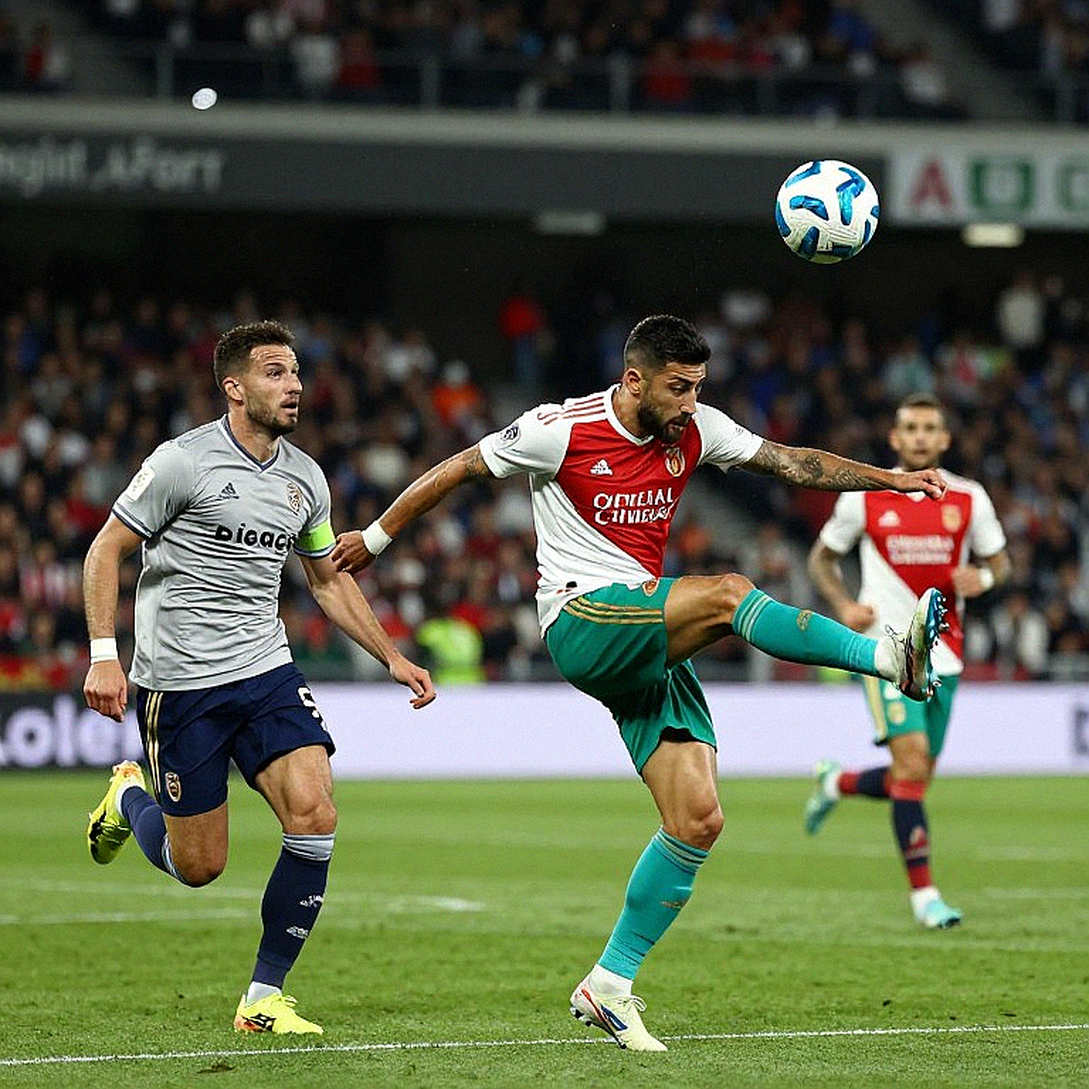

संबंधित खिलाड़ी
अनुशंसित
Challenge to Infantino: Japan FA Bid Puts FIFA Power and Commercial Model Under Scrutiny2026-11-06
Trabzonspor Target Yehor Yarmoliuk: Brentford's Long Contract and €35 Million Valuation Pose Major January Transfer Obstacles2026-11-12
Manchester United’s January 2027 Left-Back Search: Define the Role Before the Names2026-11-11
Empty Data Does Not Make Sports Journalism: An Investigation Into the Failure of a Football Analysis Pipeline2026-11-02
Football Analysis Without a Source: When the Empty Document Becomes the Story2026-11-07
Report Not Generated: Stage-1 Input Is Empty2026-11-02