
Tilak Varma to Lead Strong India A Squad in Rising Stars Asia Cup
तिलक वर्मा ACC राइज़िंग स्टार्स एशिया कप में भारत A टीम के कप्तान हैं और रजत पाटीदार उपकप्तान। 15 सदस्यीय स्क्वॉड में अभिषेक शर्मा, प्रभसिमरन सिंह, रिंकू सिंह, कुमार कुशाग्रा, हर्षित राणा, अर्शद खान, प्रिंस यादव और सूर्यांश शेडगे शामिल हैं। टूर्नामेंट 19 नवंबर से शुरू होकर 50 ओवर प्रारूप में खेला जाएगा; भारत A ग्रुप B में नेपाल (20 नवंबर), पाकिस्तान A (22 नवंबर) और UAE (24 नवंबर) से भिड़ेगा। हर ग्रुप से शीर्ष दो टीमें सेमीफ़ाइनल में पहुँचेंगी। स्क्वॉड में चार विशेषज्ञ स्पिनर और केवल तीन मुख्य तेज़ गेंदबाज़ हैं, जिससे पेस गहराई सीमित रहती है। पिछला संस्करण दोहा में टी20 प्रारूप में खेला गया था और फ़ाइनल में पाकिस्तान ने बांग्लादेश को हराया था। ध्यान दें: टूर्नामेंट का कैलेंडर वर्ष, अभिषेक शर्मा की ICC टी20 रैंकिंग की तारीख़ और हर्षित राणा की फ़िटनेस—तीनों की आधिकारिक पुष्टि ज़रूरी है।
India A will be led by Tilak Varma at the ACC Rising Stars Asia Cup after selectors named a 15-member squad, with Rajat Patidar appointed vice-captain. The tournament begins on November 19 and India A open their campaign against Nepal on November 20, followed by Pakistan A on November 22 and the United Arab Emirates on November 24.
India A are placed in Group B alongside Nepal, Pakistan A and the UAE. With four teams in the group, each side plays three matches, and India's schedule fits that pattern exactly—November 20, 22 and 24, with a day's rest between fixtures. The tournament is split into two groups, with the top two from each advancing to the semifinals.
The most discussed aspect of the squad is its shape. Of the 15 players, two are wicketkeepers (Prabhsimran Singh and Kumar Kushagra), four are specialist spinners and three are frontline seamers (Harshit Rana, Arshad Khan and Prince Yadav). That balance immediately raises a question: three specialist fast bowlers is a thin attack for a 50-over tournament, and the squad contains no clearly identified seam-bowling all-rounder. Suryansh Shedge is named, but his role is never specified. The ambiguity matters because the bowling resources are limited and the tournament is long.
Tilak Varma's appointment as captain is unsurprising. He has been a consistent run-scorer in domestic cricket and the Indian Premier League over recent seasons and has already broken into the senior set-up. Handing him the captaincy in a tournament framed as a development stage is a logical step. But it is worth noting that the squad contains several players with senior experience—Abhishek Sharma, Rinku Singh, Rajat Patidar and Tilak himself. In a team like this, captaincy is not only about decisions on the field but about pulling big names in one direction.
Patidar's appointment as vice-captain looks like a balancing move. He is an experienced top-order batter with a strong record in the longer domestic formats. In 50-over cricket the top order has a different job—protecting wickets in the first 15 overs while building a platform for acceleration in the middle overs—and Patidar's experience can help with that balance.
The batting group combines experience with explosiveness. Abhishek Sharma is currently regarded as one of the best T20 batters in the world, and is reported to sit at the top of the ICC T20I batting rankings. A caution is necessary here: rankings are updated weekly and any such claim should be stamped with an as-of date. What is relatively stable is that Abhishek can change the course of a match in the powerplay. In the 50-over format his challenge will be to stay aggressive while batting long, because the format offers less room for risk than T20.
Prabhsimran Singh offers an opening option and can keep wicket, a dual role that is valuable to squad composition because it frees a slot for an extra specialist batter. Rinku Singh is known as a middle-order finisher, and his role shifts slightly in 50-over cricket—he will have to be the accelerator between overs 30 and 50, when the ball is older and the field is spread.
Having two wicketkeepers is a clear message from the selectors. Prabhsimran can be read as first choice, with Kumar Kushagra as the reserve keeper. This arithmetic matches the decision to carry two keepers—one in the XI, the other as cover for injury or form. In domestic cricket Kushagra is identified as a wicketkeeper-batter who can bat up the order, and if the team management gives him a run it will signal a wish to add lower-order depth in the longer format.
The spin department has been strengthened in numbers, with four specialist spinners suggesting the selectors view spin as decisive in subcontinental conditions. That reasoning is sound: pitches in an Asia Cup can be slow, turn can be available, and spinners' workloads rise in the middle overs. But a fact and an interpretation must be kept apart here. The fact is that the squad contains four specialist spinners. The claim that "the selectors opted to strengthen the spin department in numbers" is an inference drawn from the composition, not a quoted statement from the selection committee. The distinction matters and should survive the reporting.
The other side of the spin-heavy build is a thinner seam attack. Playing a 50-over tournament with three frontline quicks is a risk, especially when the group stage brings matches in quick succession and a playoff place is at stake. If one seamer is injured or loses form, the options shrink sharply. Teams usually carry a seam-bowling all-rounder who can bowl seven or eight overs and add runs down the order. No one in this squad is clearly assigned that role—at least, no such name is identified in the available information. That is the squad's biggest structural weakness and it deserves discussion rather than concealment.
Harshit Rana's selection is a story in itself. He is a fast bowler who has struggled with injuries, described in the report as having had "his fair share of struggles with injuries"—a phrase that creates fog rather than information. Which injuries, how long out, and what is his current fitness? Without answers the sentence is incomplete. What can be said is that his place in this squad is being read as a step towards a return to the senior ODI side. That is an interpretation, not a selector's statement, and it should be presented as such rather than as fact.
Arshad Khan and Prince Yadav complete the seam group. For both, this tournament is a chance to show how reliable they are with the new ball and at the death in 50-over cricket. Bowling in this format is not judged on wickets alone—economy, dot-ball pressure and yorker accuracy in the last ten overs matter just as much. Young quicks often do well in T20 and lose rhythm in ODIs because the two formats ask different things. This tournament is a stage for understanding that difference.
Now the most consequential structural change: the previous edition was played in the T20 format, while this one is 50 overs a side. That is the biggest change in the story and it got barely half a sentence. A format switch does not just change the length of a match—it changes squad construction, bowling plans, batting order and fitness management. A spinner who bowls four overs in T20 bowls ten in ODI; a batter who was a finisher in T20 can take 30-40 balls in ODI. A four-spinner squad is therefore both logical and risky—logical because spin's workload rises in 50 overs, risky because the pace options run short. But the real question is why the format changed. Is it part of the host's preparation, a commercial decision by the organisers, or an attempt to promote ODI cricket? The report offers no answer, and that gap is striking.
In Group B, India A's sequence runs: Nepal first, then Pakistan A, then the UAE. Each match is separated by a day, which is necessary for bowler recovery in the 50-over format. The opener against Nepal matters psychologically—a low-pressure fixture that can still cost you if taken lightly. The Pakistan A match on November 22 can be treated as the group's biggest test, because the route to the semifinal may be decided there. The final group game against the UAE could matter for net run rate if three teams finish level on points.
It is worth recalling the previous edition. The tournament was last played in Doha, Qatar, in the T20 format, and Pakistan beat Bangladesh in the final. That information matters for two reasons. First, it shows this is not a new event but a new edition of an established tournament. Second, it raises the stakes in Group B, because the defending champions are in it. It should also be handled carefully—host city, format and final result are all facts that should be checked against the official calendar, because once an error is published it is hard to correct.
One more point the report never addresses directly: only three players have been retained from the previous squad. That signals significant change—either the selectors are deliberately backing a new generation, or availability has shifted. Whatever the reason, readers deserve to know the team has been almost entirely rebuilt. Continuity is a major factor in any tournament, and three retained players points to weak continuity.
The question that matters most, and which goes unanswered: why are senior internationals playing in an emerging-players tournament? Abhishek Sharma, Tilak Varma, Rinku Singh and Rajat Patidar have all played at senior level, which suggests this team is built to win a trophy rather than to develop players. The two aims are not mutually exclusive, but when the number of senior players rises, space for younger players shrinks—and that is the core purpose of events like this. If the goal is the trophy, it is a different kind of tournament and should be presented as one. If the goal is development, it is fair to ask what happens to players who performed in domestic cricket and still missed out. The "strong squad" framing buried that question instead of raising it.
Another missing piece is eligibility. Is there an age cap? A cap on international appearances? Can anyone play? Without answers it is hard to know whether the selection of senior players is valid under the rules. This may look like technical detail, but it is central to defining what the tournament is.
The imbalance is obvious when looking at the opposition. Every India A player gets a mention—one is a "young sensation", another a "prolific runscorer in the IPL". But not a word is written about the Pakistan A, Nepal or UAE squads. That is odd, because India's hardest match in Group B is likely to be against Pakistan A. A preview is incomplete until the opposition's strength is assessed—who the fast bowlers are, which spinner has the record, which batter is in form. Readers deserve to know what level of opposition India's "strong" team is facing.
The tournament's identity is also unclear. The headline says "Rising Stars Asia Cup" while elsewhere it is "ACC Rising Stars Asia Cup". The Asian Cricket Council is never expanded or introduced, and it is not explained whether this is a rebranded Emerging Teams Asia Cup. Naming changes matter for events like this—they can signal changes in sponsorship, broadcast rights or event category.
Several practical aspects are entirely absent: prize money, broadcast details, whether this leads to a bigger tournament, whether there are ranking or qualification stakes. These details should have accompanied the "strong squad" story because they tell readers how much the tournament matters.
The word "strong" in the headline is also worth questioning. It is an evaluation, not news. A squad's strength cannot be assessed without comparing it to the opposition and discussing its weaknesses. This squad has an obvious weakness—three specialist seamers—and it is not in the headline. Likewise, epithets such as "young sensation" and "prolific runscorer" convey no information; they create atmosphere. A balanced report gives experience and risk equal space.
Finally, the question of the year. The tournament begins on November 19—but which year is not clearly stated in the schedule. A reader cannot tell which calendar year this is, or when the previous edition was. In a sports report this is not a small matter, because rankings, fitness, "last edition" and the list of retained players all change with the year. Confirmation from the tournament calendar is essential, and only after that should ranking and fitness claims be finalised.
Even amid these ambiguities, the squad is worth attention. It has batters who can change a game alone, spinners who can build pressure in the middle overs, and fast bowlers at an important turn in their careers. For India A the tournament plays a dual role—in one sense it is a trophy chase, in another it is an examination for players standing on the ladder to the senior team.
The 50-over format makes that examination different. In T20 one good innings or two good overs can change a career; in 50 overs, consistency and patience matter more. That is why the three group matches should be read not as three separate fixtures but as a sequence—finding rhythm against Nepal, making decisions under pressure against Pakistan A, and managing net run rate against the UAE.
In bowling terms, the biggest test will be how three quicks cover 30 of the 50 overs. In ODI cricket fast bowlers typically bowl ten overs each, meaning three seamers cover 30 overs and the remaining 20 must be shared among spinners and all-rounders. With four specialist spinners that split looks feasible—but only if all the quicks stay fit. One injury and the balance breaks. That is the squad's biggest risk, and the team management will know it.
The most useful thing for readers is to check the squad list, captaincy, group and schedule against the official announcement, to read ranking claims with an as-of date, to verify last edition's results independently, and to ask directly about Harshit Rana's fitness. That is the minimum standard of journalism—and this squad's story deserves it.
In short: India A have a team with batting depth and an abundance of spin, but the depth of the pace attack is under question. Captain Tilak Varma has a chance to prove himself, and vice-captain Rajat Patidar to give the team stability. The tournament starting November 19 will show whether this "strong" squad is strong on paper or on the field as well.
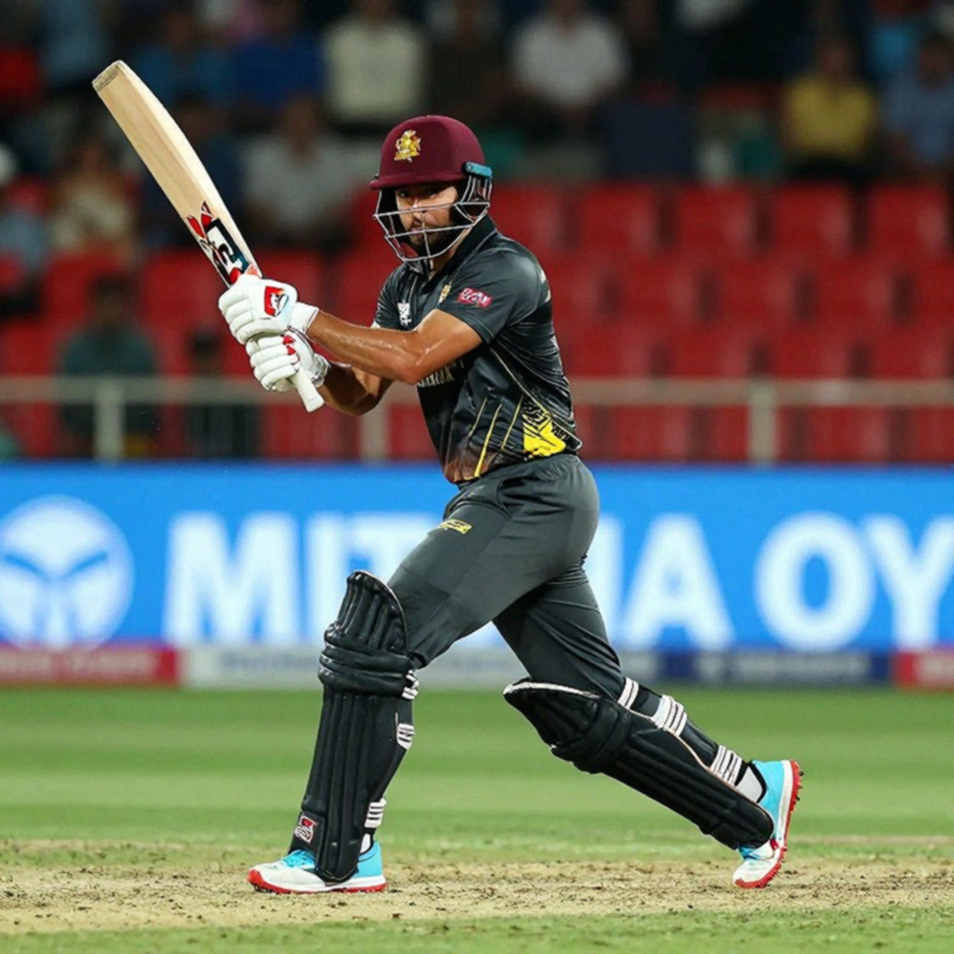
संबंधित खिलाड़ी
अनुशंसित
The Empty Paper Trail: When a Cricket Analysis Has No Data, It Has No Verdict2026-11-06
Rashid Khan Tightens Grip on No.1 ODI Bowling Spot, Shai Hope Enters T20I Top 10 After Century Spree2026-10-22
Marufa Akter's Injury: The Headline Says 'Maybe', the Body Says 'No'2026-11-02
Scott Boland’s Place: Why Five Wickets Did Not Settle Australia’s Team-Balance Question2026-11-11
Green Top at Lincoln, Rain and 227/2: Why Sai Sudharsan's 205-Ball Knock Matters More Than Jaiswal's Century2026-11-08
Duffy Returns and the Basin Turns Green: New Zealand's 14-Man Squad Is a Pitch Read, Not a Selection2026-11-16